Last updated on February 20th, 2026
- Intro
- History & Origins of The Albino Pug Breed
- Recognition & Breed Standard for Albino Pugs
- Physical Traits of Albino Pugs
- Temperament & Personality of Albino Pugs
- Health, Risks & Longevity of Albino Pugs
- Care, Diet & Grooming for Albino Pugs
- Ethical & Legal Considerations for Buying or Adopting Albino Pug Dogs
- Fun Facts & Trivia About Albino Pugs
- Albino Pug Dogs Are Exceptionally Rare
- Often Mistaken for White Pugs
- Unique Eye Colors
- Extra Sensitive to the Sun
- High Demand but Ethical Dilemmas
- Adopting or Buying an Albino Pug
- FAQs About Albino Pugs
- Are albino pugs purebred?
- Are albino pugs recognized by kennel clubs?
- Are albino pugs rare?
- What’s the difference between albino and white pugs?
- How much do albino pugs cost?
- Do albino pugs have more health issues?
- How long do albino pugs live?
- Can albino pugs go out in the sun?
- Can I adopt an albino pug?
- Should I buy an albino pug from an online ad?
Intro

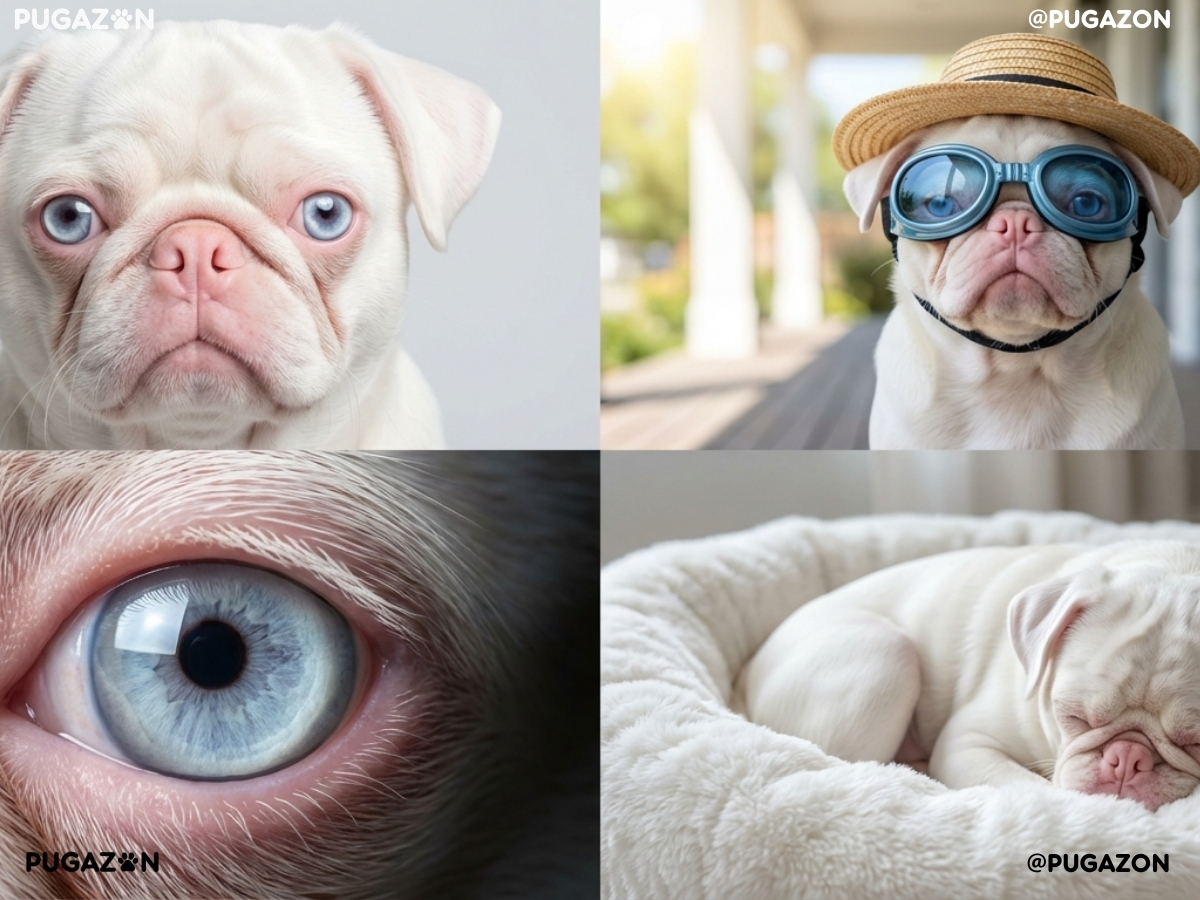
Albino pugs are one of the rarest and most misunderstood variations within the pug breed. Unlike pale fawn or white-coated pugs, the albino pug lacks pigmentation entirely due to a genetic mutation that impacts melanin production. This unique genetic trait results in a snow-white coat, pinkish skin, pale or blue-tinted eyes, and a higher sensitivity to sunlight. True albinism in pugs is extremely uncommon and often linked to significant health considerations, making ethical breeding and responsible ownership crucial topics for discussion.
Unfortunately, the albino pug dogs are often marketed online as “rare” or “exclusive,” and often at inflated prices without transparency about potential health complications. Some listings labeled as albino are not genuine cases of albinism but rather very light fawn or mixed-breed dogs.
This guide provides a factual, detailed overview of albino pugs—from their genetic background and differences compared to white pugs, to their physical characteristics, known health risks, and care requirements. For prospective owners, understanding these details is essential before making a decision. For verified breeders, ethical adoption resources, and scam prevention tips, visit Pugs for Sale.
History & Origins of The Albino Pug Breed
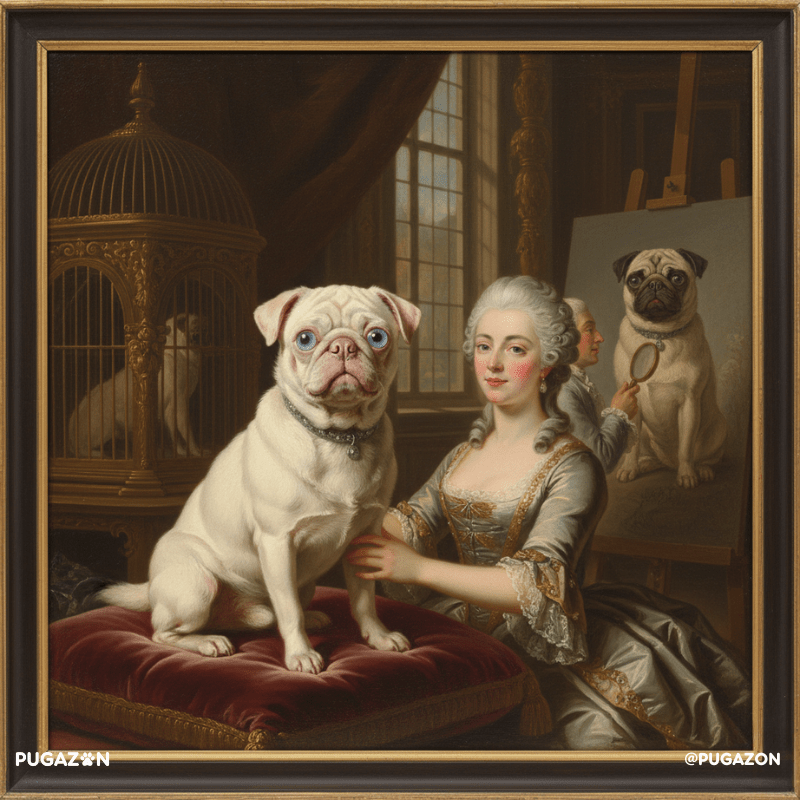
The Albino pug has no documented presence in the breed’s earliest history. Traditional pugs from imperial China and later European breeding programs were primarily fawn or black. Albinism is a rare genetic occurrence caused by a mutation that inhibits melanin production, meaning that true albino pug dogs only appear occasionally within purebred lines.
Early Reports of Albino Pug Variants
References to albino pug variants are scarce and mostly modern. The rarity stems from:
- The low likelihood of two recessive albino genes pairing in a pug lineage.
- Limited historical emphasis on breeding for such traits, as early breeders prioritized robust pigmentation for show standards.
Modern-Day Appearance
Albino pugs today may result from:
- Random genetic mutation within purebred fawn or black pug lines.
- Unethical breeding practices, where color traits are prioritized over health, sometimes leading to congenital defects.
- Crossbreeding, where albinism is introduced from another breed but marketed falsely as “purebred albino pug.”
Because albinism is rare and sometimes linked to inbreeding or poor genetic management, prospective buyers must approach such claims with caution.
Recognition & Breed Standard for Albino Pugs
The Albino pug breed are not recognized as a standard color by any major kennel club, including:
- The American Kennel Club (AKC)
- The Kennel Club (UK)
- The Pug Dog Club of America (PDCA)
Breed standards only accept fawn and black coats, with strong pigmentation around the mask, ears, and nails considered essential. Albino pugs, by definition, lack this pigmentation, which excludes them from meeting official breed requirements.
Show Eligibility
- Albino pugs cannot compete in official conformation shows as their coloring is considered a fault under breed standards.
- They can still be registered as companion pets, provided lineage documentation proves purebred heritage, but most kennel clubs will classify them under non-standard categories.
Key Differences from White Pugs
Albino pugs differ significantly from pale or white pugs:
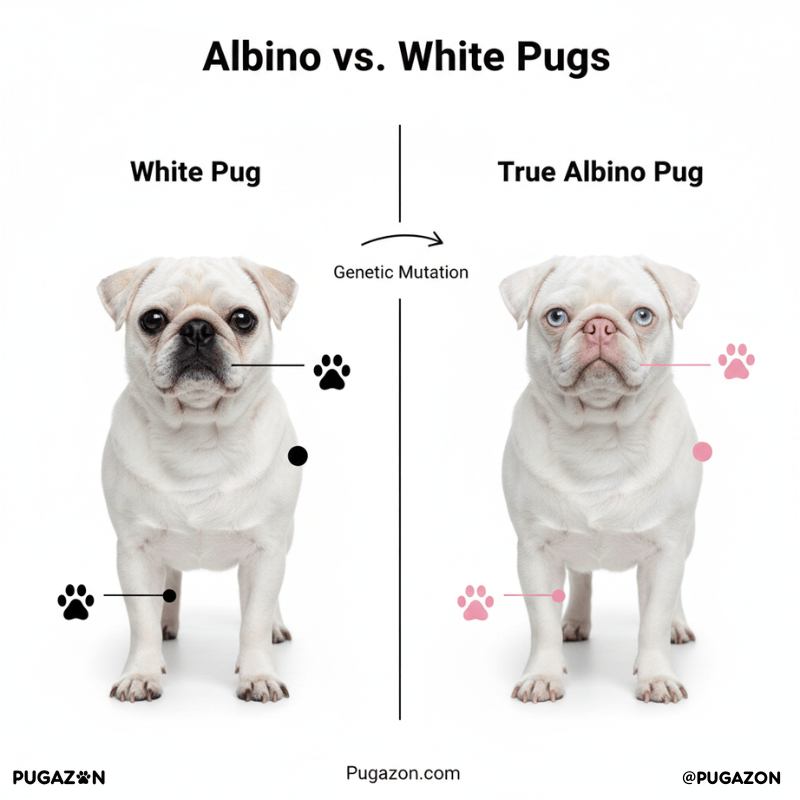
- Albino: No melanin production, resulting in white coat, pink skin, pale or blue eyes, and potential vision or hearing issues.
- White: Typically very light fawn or diluted pigment, with normal black eyes, nose, and paw pads, and no associated genetic health issues.
Physical Traits of Albino Pugs
The Albino pug breed share the standard pug body structure but exhibit distinctive physical features due to their lack of pigmentation.
Size and Build
- Height: 10–13 inches (25–33 cm)
- Weight: 14–18 pounds (6.3–8.1 kg)
- Square, compact body with curled tail and muscular frame, typical of the breed.
Coat and Skin
- Pure white coat with no visible fawn or cream undertones.
- Pinkish skin, particularly around the nose, eyes, and ears.
- Lack of dark pigmentation on paw pads and nails, often resulting in light-colored claws.
- More prone to sunburn and skin irritation compared to pigmented pugs.
Eye Color and Sensitivity
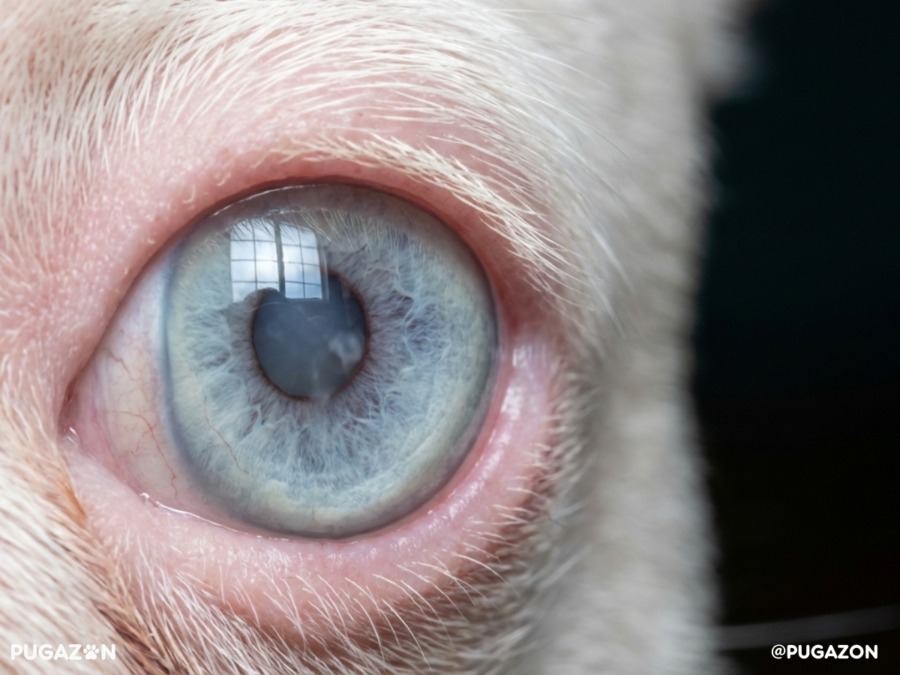
- Eyes may appear pale blue, gray, or pinkish due to lack of melanin.
- Albino pugs often experience photophobia (light sensitivity) and are more susceptible to vision issues such as partial blindness or poor night vision.
Grooming Challenges
- White fur shows dirt and stains easily, requiring frequent cleaning.
- Skin is delicate, making harsh grooming products unsuitable.
- Owners must avoid prolonged sun exposure to prevent burns or skin damage.
Key Physical Characteristics
- Lack of pigment across coat, skin, eyes, and nose.
- More fragile health compared to standard pugs.
- Requires heightened care for skin, eyes, and overall well-being
Temperament & Personality of Albino Pugs

Albino pugs generally share the same affectionate, loyal, and playful temperament as other pugs, provided they are purebred and raised in healthy environments. However, health challenges associated with albinism can sometimes affect their confidence, energy levels, and behavior.
General Personality
- Loving, people-oriented, and happiest when near their family.
- Playful but often less energetic than standard pugs due to potential vision sensitivity or discomfort under bright light.
- Loyal and affectionate, making excellent lap dogs and companions.
- Naturally sociable, though some may appear cautious or shy in unfamiliar environments.
Behavioral Considerations
- Light sensitivity: Albino pugs may avoid bright areas or be hesitant outdoors during sunny conditions.
- Noise reactivity: Some dogs with genetic pigment dilution experience partial hearing loss, leading to uncertainty in new environments.
- Training needs: Positive reinforcement and patience are essential, as these dogs can become anxious if stressed.
Suitability for Families
Albino pugs thrive in calm households where:
- They receive consistent companionship and minimal time alone.
- Children are taught to handle them gently due to their more delicate skin and eyes.
- Outdoor time is carefully managed to avoid excessive sunlight exposure.
Health, Risks & Longevity of Albino Pugs
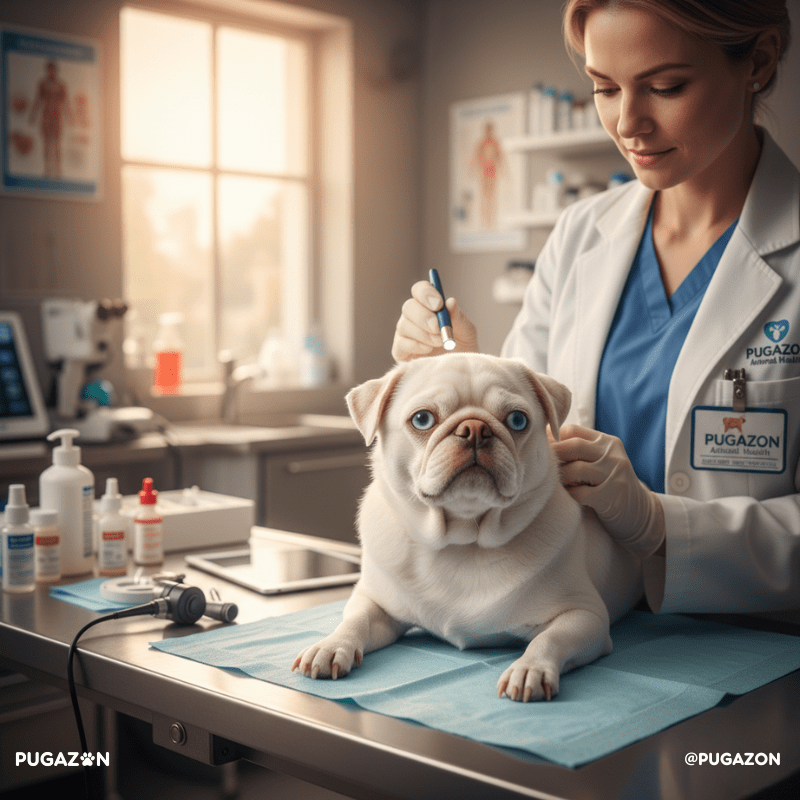
The Albino breed face all standard pug health concerns plus additional risks linked to their genetic condition.
General Pug Health Risks
- Brachycephalic airway syndrome (breathing issues).
- Eye problems due to protruding eyes.
- Hip dysplasia and patellar luxation.
- Obesity leading to respiratory and joint stress.
Albinism-Specific Health Issues
- Skin sensitivity: High risk of sunburn, dermatitis, and even skin cancer without proper care.
- Vision problems: Light sensitivity, poor night vision, or partial blindness.
- Hearing issues: Some albino dogs experience partial hearing impairment due to lack of pigment in inner ear structures.
- Weakened immune function: In rare cases, albinism may be linked to reduced resilience against infections.
Lifespan
The Albino pug dog can live 10–15 years, but overall lifespan depends heavily on:
- Quality of breeding practices (avoiding inbreeding).
- Proper healthcare, sun protection, and weight management.
- Early diagnosis and treatment of vision or hearing deficits.

Last update on 2025-02-12 / * Affiliate links / Image source: Amazon Product Advertising API
Care, Diet & Grooming for Albino Pugs
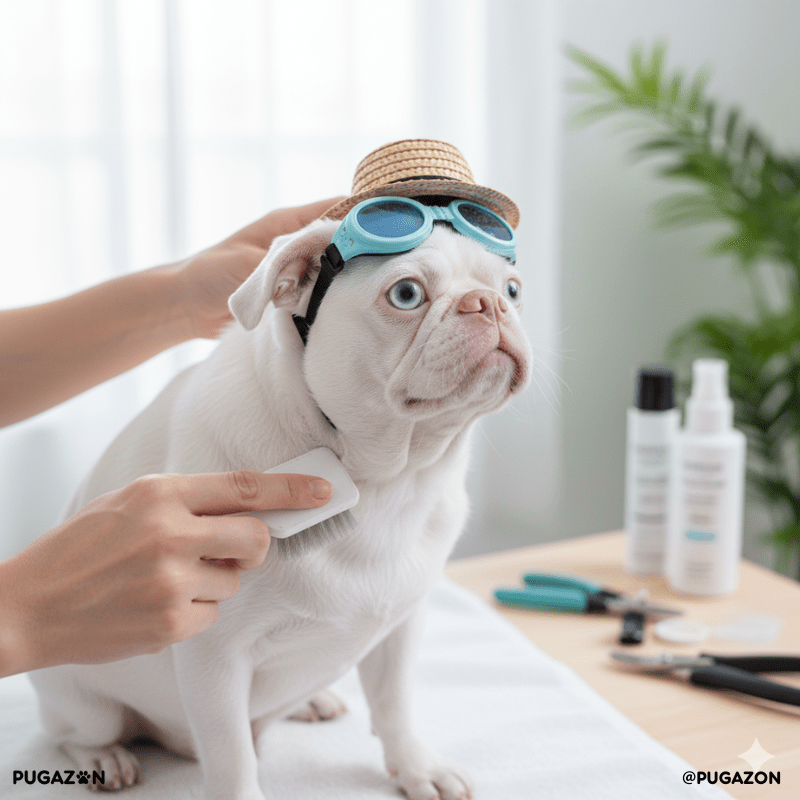
The Albino pug dog does need extra care compared to standard-colored pugs due to their fragile skin, sensitive eyes, and higher risk of sun-related health problems.
Grooming Routine
- Daily cleaning of wrinkles and tear stains to prevent infection and discoloration.
- Gentle, hypoallergenic shampoos to protect sensitive skin.
- Regular brushing (3–5 times per week) to remove loose fur and maintain coat condition.
Sun Protection
- Avoid midday walks; prefer early mornings or late evenings.
- Use dog-safe sunscreen on exposed areas like the nose, ears, and belly.
- Provide shaded areas and limit time outdoors during peak UV hours.
Diet Considerations
- High-quality food rich in omega fatty acids to support skin and coat health.
- Antioxidant-rich foods to strengthen immunity.
- Controlled feeding to prevent obesity, which exacerbates breathing and joint problems.
Indoor Comfort
- Albino pug dogs often prefer dimly lit areas due to light sensitivity.
- Provide soft bedding to prevent skin irritation.
- Maintain a clean indoor environment to avoid coat staining.
Ethical & Legal Considerations for Buying or Adopting Albino Pug Dogs

Unethical Breeding Practices
The Albino pug dog are not a recognized breed standard, yet some breeders intentionally pair dogs with recessive albinism genes to market “rare” puppies at inflated prices. Risks include:
- Higher genetic defects due to inbreeding.
- Misrepresentation of mixed-breed dogs as albino pugs.
- Lack of transparency about potential health problems.
Choosing a Reputable Source
- Verify pedigree and ensure parents are tested for genetic health conditions.
- Avoid breeders who focus solely on rare coloring without prioritizing overall health and welfare.
- Insist on meeting both parents and reviewing medical documentation before purchase.
Adoption Options
True albino pug dogs are rare so adoption opportunities are limited but possible through specialized pug rescues. Adoption benefits include:
- Lower cost compared to breeder prices.
- Full disclosure of health conditions and temperament.
- Avoiding financial support for unethical breeding practices.
For vetted breeders and legitimate rescue options, visit Pugs for Sale to make an informed, ethical decision.
Fun Facts & Trivia About Albino Pugs

Albino Pug Dogs Are Exceptionally Rare
Unlike pale fawn or white pugs, true albino pugs are caused by a genetic mutation affecting melanin production, making them a genuine rarity within the breed.
Often Mistaken for White Pugs
Many pugs marketed as “albino” are actually very light fawn or crossbred dogs with white coats but full pigmentation around the nose and eyes. Albino pugs lack pigment entirely.
Unique Eye Colors
Albino pugs may have pale blue or even pinkish eyes due to absence of pigment, a feature not found in standard or white pugs.
Extra Sensitive to the Sun
Without natural pigment, albino pugs are highly vulnerable to sunburn and skin conditions, requiring sunscreen and shaded outdoor areas at all times.
High Demand but Ethical Dilemmas
Because of their rarity, albino pugs are often sold at exorbitant prices, creating a market for unethical breeding practices that may harm the dogs’ overall health.
Adopting or Buying an Albino Pug
The Albino pug breed are captivating but come with unique care needs and higher health risks. Many dogs sold as “rare albino pugs” are either pale-colored fawns or poorly bred crossbreeds.
If you’re considering buying or adopting an albino pug, prioritize health and ethics over rarity. Visit Pugs for Sale for verified breeders, trusted adoption listings, and essential guidance to avoid scams and irresponsible breeding practices.
FAQs About Albino Pugs
They can be, but true albinism is a genetic rarity in purebred lines. Many advertised as albino are actually white or crossbred pugs.
No, major clubs like the AKC only recognize fawn and black pugs. Albino pugs are considered non-standard.
Yes, true albino pugs are exceptionally rare due to the recessive gene required for albinism.
Albino pugs lack all pigment, often having pink noses and pale eyes, while white pugs are usually pale fawn with normal dark features.
Prices vary widely but are often inflated. Ethical breeders do not charge excessive fees for rarity alone.
Yes, they are prone to sunburn, skin conditions, vision problems, and sometimes hearing deficits due to lack of pigment.
Typically 10–15 years, though health complications may shorten lifespan compared to standard-colored pugs
Yes, but only with precautions—dog-safe sunscreen, shaded areas, and avoiding peak sunlight hours.
Possibly, but they are rare. Specialized pug rescues may occasionally have albino pugs needing rehoming.
Proceed with extreme caution. Many online listings are scams or unethical breeders prioritizing profit over health.