Last updated on February 12th, 2026
- Intro
- History & Origins of Rare Color Pugs (Blue, Chocolate, Lilac)
- Recognition & Breed Standard for Rare Color Pugs
- Physical Traits of Blue, Chocolate & Lilac Pugs
- Temperament & Personality of Rare Color Pugs (Blue, Chocolate, Lilac)
- Health, Risks & Longevity of Rare Color Pugs
- Care, Diet & Grooming for Rare Color Pugs
- Ethical & Legal Considerations in Buying or Adopting Rare Color Pugs
- Fun Facts & Trivia About Rare Color Pugs (Blue, Chocolate & Lilac)
- None Are Officially Recognized Colors
- Many Result from Crossbreeding
- Marketing Hype Creates “Luxury Pricing”
- Genetics Make Colors Unpredictable
- Social Media Drives Demand
- Adopting or Buying a Rare Color Pug
- FAQs About Rare Color Pugs
- Are blue, chocolate, and lilac pugs purebred?
- Are these colors recognized by kennel clubs?
- Are rare color pugs more expensive?
- Do rare color pugs have unique health problems?
- Can rare color pugs compete in dog shows?
- Do rare color pugs shed more or less than standard pugs?
- How can I verify a rare color pug is purebred?
- Should I avoid buying rare color pugs?
- Can I adopt a blue, chocolate, or lilac pug?
- Why are these colors controversial?
Intro

Rare color pugs like blue, chocolate, and lilac have become increasingly popular among dog enthusiasts seeking a unique twist on the classic pug appearance. These striking coats are undeniably eye-catching, but they also come with controversies. Unlike standard fawn and black pugs, these rare hues are not recognized by major kennel clubs, often resulting from crossbreeding or selective breeding practices aimed solely at producing unusual colors.
While these pugs can be just as loving and charming as any other pug, potential owners must approach rare color variants with caution. High demand and marketing hype often lead to inflated prices, unethical breeding, and health risks due to prioritizing coat color over genetic soundness. Understanding the facts behind these variations is essential before deciding to buy or adopt.
This guide explores the three most talked-about rare pug colors—blue, chocolate, and lilac. We’ll cover their origins, genetics, physical traits, temperament, health considerations, and ethical issues surrounding their breeding. For those considering adding one of these unique pugs to their family, always seek reputable sources and adoption opportunities listed on Pugs for Sale to avoid scams and poor breeding practices.
History & Origins of Rare Color Pugs (Blue, Chocolate, Lilac)

Traditional pug colors are limited to fawn and black, recognized globally by kennel clubs such as the AKC and The Kennel Club (UK). Rare colors like blue, chocolate, and lilac are non-standard and likely originate from historical crossbreeding or genetic dilution.
Emergence of Rare Coat Colors
- Blue Pugs: Believed to stem from genetic dilution of black coat pigment or crossbreeding with blue-coated breeds like French Bulldogs.
- Chocolate Pugs: Occur when two recessive brown genes are paired, often introduced via non-standard lineage or crossbreeding.
- Lilac Pugs: A rare combination of dilution genes resulting in a grayish-purple tone, not naturally occurring in purebred pug lines.
Why They’re Non-Standard
- Major kennel clubs only recognize fawn and black to maintain the breed’s traditional characteristics.
- Rare color variants are often not eligible for official registration or dog shows.
- Focus on coat color can compromise genetic diversity and overall breed health.
Recognition & Breed Standard for Rare Color Pugs
Kennel Club Classification
- AKC, The Kennel Club, PDCA: Only fawn and black are officially recognized.
- Blue, chocolate, and lilac pugs are registered as “non-standard” or sometimes not eligible for full registration due to uncertain ancestry.
Impact on Show Eligibility
- Rare-colored pugs cannot compete in conformation shows because their coloring falls outside the breed standard.
- Some breeders advertise them as “rare purebreds,” but without verifiable pedigree, many do not meet true pug breed criteria.
Purebred or Crossbred?
- Many rare color pugs trace their lineage to crossbreeding with breeds carrying dilute or chocolate genes.
DNA testing is often necessary to confirm pug purity when purchasing a rare-colored puppy.
Physical Traits of Blue, Chocolate & Lilac Pugs
These rare-colored pugs generally have the same compact, muscular build and facial features as standard pugs but display unique coat tones due to genetic variations.
Size and Build
- Height: 10–13 inches (25–33 cm).
- Weight: 14–18 pounds (6.3–8.1 kg).
- Stocky frame, curled tail, and distinctive pug face, though slight differences may appear in crossbred dogs.
Coat Colors
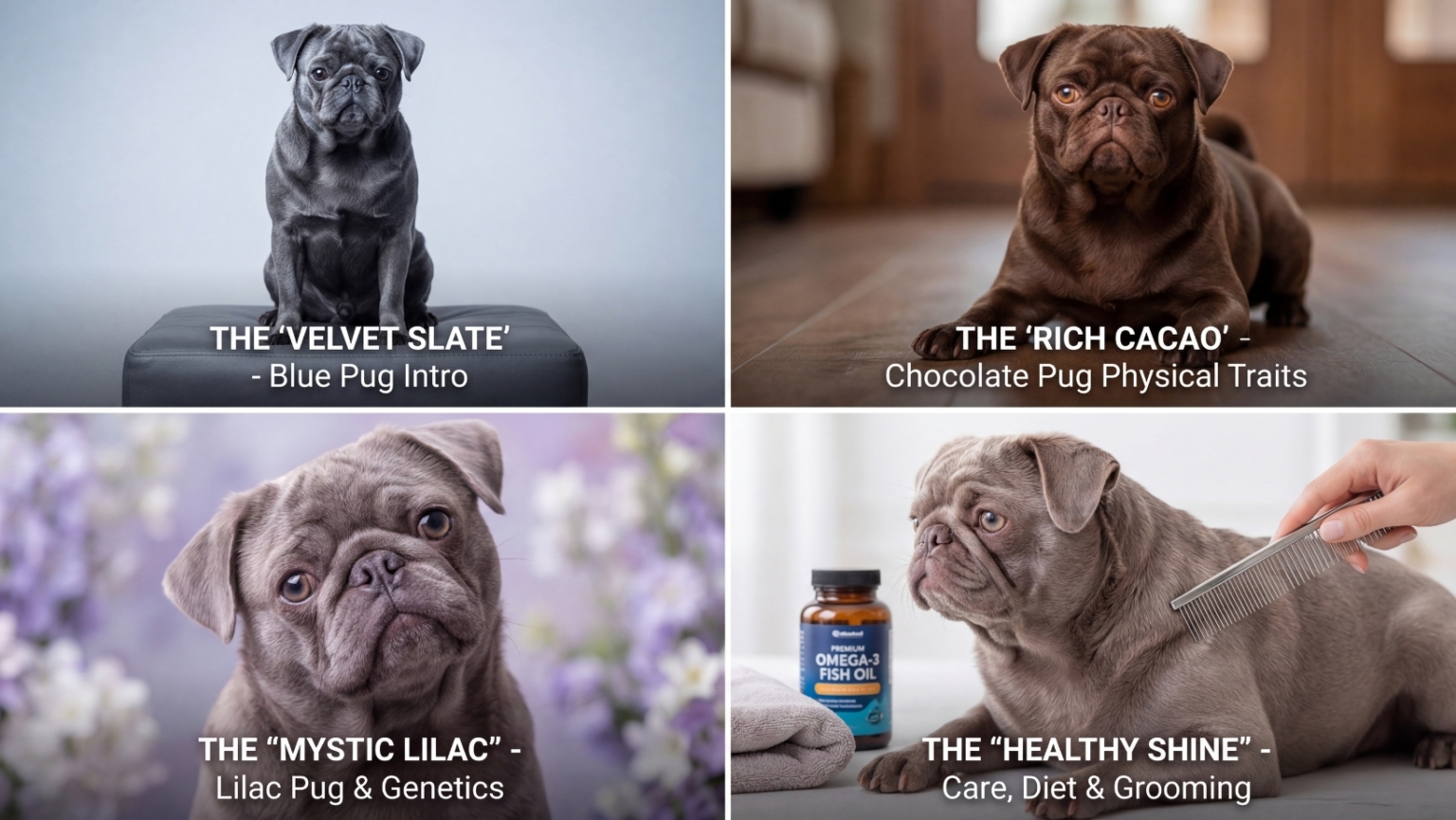
- Blue Pugs: Slate-gray coat caused by diluted black pigment.
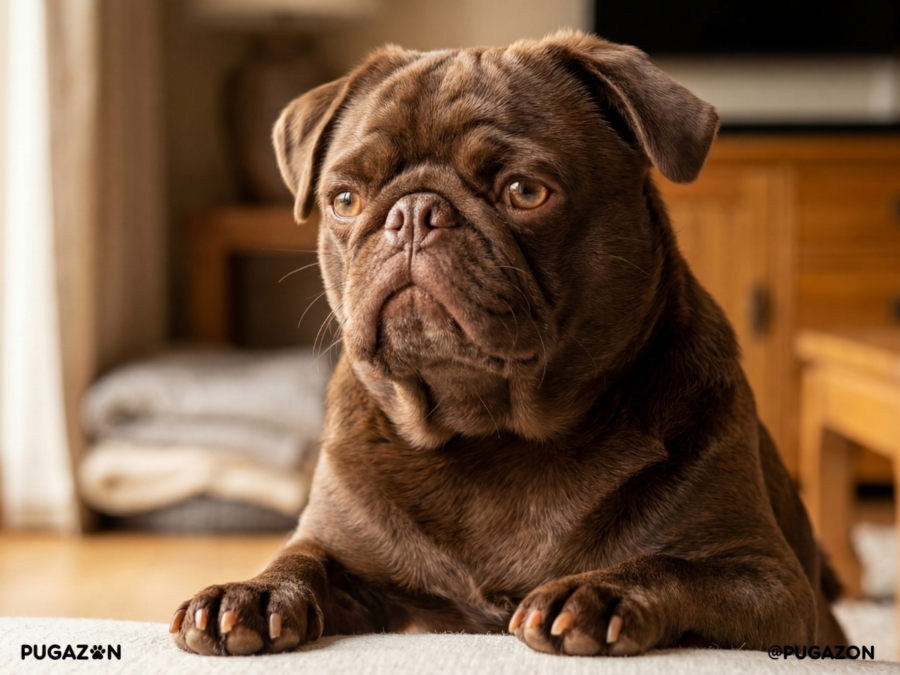
- Chocolate Pugs: Rich brown coloring with lighter nose and paw pads.
- Lilac Pugs: A softer, grayish-purple tone resulting from multiple dilution genes.
Grooming Needs
- Coat care is the same as other pugs: brushing 3–4 times weekly, regular wrinkle cleaning, and bathing every 4–6 weeks.
- Lighter-colored rare pugs may show tear staining more visibly and require extra facial cleaning.
Temperament & Personality of Rare Color Pugs (Blue, Chocolate, Lilac)
Rare-colored pugs, when purebred, usually share the same personality traits as standard-colored pugs: affectionate, loyal, and playful companions. However, because many rare pugs result from crossbreeding or unethical breeding practices focused on color, temperament can sometimes vary.
Core Personality Traits
- Loving, family-oriented, and happiest in close contact with their humans.
- Playful but not overly energetic, making them suitable for apartments or small homes.
- Generally friendly toward strangers and other pets with proper socialization.
- Known for their “clownish” charm, providing endless entertainment.
Potential Variations in Behavior
- Crossbreeding may introduce behavioral traits not typical of pugs, such as increased energy or independence.
- Poor breeding environments can result in shy, anxious, or poorly socialized puppies.
- Early training and positive reinforcement are crucial to ensure well-adjusted adult dogs.
Suitability for Families
- Ideal for households with children and other pets when properly socialized.
- Require regular companionship and do not cope well with long hours alone.
- Thrive in calm, affectionate environments where they receive consistent attention.
Health, Risks & Longevity of Rare Color Pugs

Rare-colored pugs face the same health concerns common to all pugs, but certain color-linked genetic factors and poor breeding practices may add risks.
Standard Pug Health Issues
- Brachycephalic airway syndrome (breathing problems).
- Eye conditions such as ulcers and corneal scratches.
- Joint problems including patellar luxation and hip dysplasia.
- Obesity leading to additional health complications.
Color-Linked Health Concerns
- Blue Pugs: May inherit color dilution alopecia, causing patchy hair loss or skin sensitivity.
- Chocolate Pugs: At risk of pigment-related eye conditions if bred irresponsibly.
- Lilac Pugs: May suffer from weakened coat and skin due to double dilution genetics.
Lifespan
With proper breeding and care, rare pugs can live 12–15 years, similar to standard pugs. However, poor breeding for color rarity can shorten life expectancy due to congenital defects or compromised immune health.

Last update on 2025-02-12 / * Affiliate links / Image source: Amazon Product Advertising API
Care, Diet & Grooming for Rare Color Pugs

Rare-colored pugs need the same general care as other pugs, with additional attention to coat maintenance and skin health.
Grooming Routine
- Brush 3–4 times weekly to manage heavy shedding and keep coat healthy.
- Bathe every 4–6 weeks with gentle, breed-appropriate shampoos.
- Clean wrinkles daily to prevent infections and staining.
- Monitor for skin irritation, particularly in blue and lilac pugs prone to alopecia.
Diet for Coat Health
- High-quality, balanced diet rich in omega fatty acids for skin and coat support.
- Supplements like fish oil or biotin may help maintain healthy pigmentation and prevent hair loss.
- Strict portion control to prevent obesity, a common issue in all pugs.
Environmental Care
- Avoid excessive sun exposure for lighter coats to prevent skin sensitivity or burns.
- Keep indoor environments clean and cool to support breathing and coat health.
- Use harnesses instead of collars to protect airways during walks.
Ethical & Legal Considerations in Buying or Adopting Rare Color Pugs

Rare color pugs are highly sought after, creating opportunities for unethical breeding and false advertising.
Market Risks
- Many rare pugs are marketed as “exclusive purebreds” without proof of lineage.
- Unverified breeders may prioritize coat color over health, leading to inherited diseases.
- Prices are often inflated, exploiting rarity without ensuring genetic quality.
Choosing a Responsible Source
- Verify pedigree and request DNA testing to confirm pug lineage.
- Insist on health testing for parents, particularly for genetic conditions linked to dilute coloring.
- Avoid breeders who emphasize color rarity over responsible breeding standards.
Adoption Opportunities
Many rare-colored pugs or pug mixes appear in rescues due to breeding fallout or surrendered litters. Adoption offers:
- A chance to give a loving home to a pug in need.
- Lower costs than breeder prices.
- Health assessments and transparency from reputable rescues.
For verified breeder recommendations and adoption listings, visit Pugs for Sale before making a decision.
Fun Facts & Trivia About Rare Color Pugs (Blue, Chocolate & Lilac)

None Are Officially Recognized Colors
Major kennel clubs such as the AKC only recognize fawn and black coats. Rare colors cannot compete in official conformation shows.
Many Result from Crossbreeding
Most rare pugs are not naturally occurring in purebred lines. Their colors often stem from historical or recent crossbreeding with breeds carrying dilution or brown genes.
Marketing Hype Creates “Luxury Pricing”
Some breeders charge thousands more for rare colors, labeling them “exclusive” or “designer,” even when health testing is lacking.
Genetics Make Colors Unpredictable
Breeding two rare-colored pugs does not guarantee rare-colored puppies, as recessive genes can produce standard fawn or black coats.
Social Media Drives Demand
Photos of blue, chocolate, and lilac pugs have gone viral on platforms like Instagram, fueling popularity despite non-standard status.
Adopting or Buying a Rare Color Pug
Rare-colored pugs are beautiful and unique, but prospective owners must navigate carefully to avoid scams and poor breeding practices. Many listings exaggerate rarity or sell crossbreeds as purebred pugs without health guarantees.
For verified breeder lists, reputable adoption options, and guidance on making an ethical purchase, visit Pugs for Sale before buying a blue, chocolate, or lilac pug puppy.
FAQs About Rare Color Pugs
Most rare color pugs originate from crossbreeding with other small breeds carrying the necessary color genes. Purebred rare pugs are extremely uncommon and often not verifiable without DNA testing.
No, official pug breed standards only allow fawn and black coats. Rare colors are registered as non-standard or not eligible for official recognition.
Yes, prices are often inflated, sometimes double or triple standard pug prices, due to their unusual coat tones and “exclusive” marketing.
Some color-linked genetics (especially in blue and lilac pugs) may cause skin sensitivity, alopecia, or eye issues. Health testing is crucial before purchase.
No, they cannot enter conformation shows under major kennel clubs due to non-standard coat coloring.
Shedding levels are similar, though hair visibility may vary depending on coat shade.
Ask for pedigree documentation, health certifications, and consider DNA testing to confirm pug lineage.
Not necessarily, but only buy from reputable breeders who prioritize health over color. Adoption is a great alternative.
Yes, rare-colored pugs or pug mixes occasionally appear in rescues, often due to overbreeding or owners unable to manage them.
Rare-colored pugs challenge breed standards, may involve crossbreeding, and can suffer from health issues due to unethical breeding solely for appearance.