Last updated on February 19th, 2026
- Intro
- History & Origins of Puggles
- Recognition & Breed Status
- Physical Traits of Puggles
- Temperament & Personality of Puggles
- Health, Risks & Longevity of Puggles
- Care, Diet & Grooming for Puggles
- Ethical Buying & Adoption Considerations
- Fun Facts & Trivia About Puggles (Pug Beagle Mix)
- They Sparked the Designer Dog Trend
- Two Looks, One Breed Mix
- Potential for Less Snoring (Sometimes)
- Champion Escape Artists
- Hollywood Fame
- Adopting or Buying a Puggle
- FAQs About Puggles
- Is the puggle a purebred dog?
- Do puggles have fewer breathing problems than pugs?
- Is the puggle a good family pet?
- How big does a puggle get?
- How long do puggles live?
- Are puggles hypoallergenic?
- Does the pug and beagle mix bark a lot?
- Do puggles need a lot of exercise?
- How much do puggles cost?
- Can I adopt a puggle instead of buying one?
Intro

Puggles, the delightful cross between a pug and a beagle, have gained widespread popularity as one of the most charming designer dog mixes. Known for their playful energy, loving personalities, and irresistibly cute looks, puggles are a favorite among families seeking a small yet active companion. Often referred to as a pug beagle mix, this hybrid combines the affectionate, people-loving nature of pugs with the lively, curious temperament of beagles.
But there’s more to the pug & beagle mix than their adorable faces. As a mixed breed, their physical traits, behavior, and health risks can vary greatly depending on genetics and breeding practices. Some puggles inherit more pug-like qualities, while others lean heavily toward their beagle parent. Understanding this variability is essential for anyone considering adding a puggle to their home.
In this comprehensive guide, we’ll explore the history, appearance, temperament, health considerations, and care requirements for puggles. We’ll also cover important tips for finding ethical breeders or adoption opportunities, ensuring you avoid common scams or unhealthy litters.
For verified breeder recommendations and adoption listings, visit Pugs for Sale.
History & Origins of Puggles

Puggles are a modern hybrid dog, intentionally bred in the U.S. during the 1980s to combine the pug’s affectionate disposition with the beagle’s intelligence and energy. Early breeders aimed to create a small, sturdy dog with fewer breathing issues than purebred pugs while retaining their charming personality.
- Unintentional crossbreeds: Likely existed long before the term “puggle” became popular, especially in regions where both breeds were common.
- Designer dog trend: The pug & beagle mix rose to fame in the early 2000s, boosted by celebrity ownership and media coverage.
- First-generation focus: Responsible breeders emphasize crossing purebred pugs with purebred beagles to maintain desired traits and avoid unpredictable outcomes in later generations.
Recognition & Breed Status
- Not recognized as a standard breed: Major kennel clubs like the AKC classify puggles as hybrids.
- Hybrid registries: Some organizations record puggles if both parents are registered purebreds.
- Show eligibility: Puggles cannot compete in traditional conformation shows but are eligible for agility, obedience, and mixed-breed events.
- Debate: Supporters claim puggles combine the “best of both breeds,” while critics argue that designer mixes lack predictability and often result from profit-driven breeding.
Physical Traits of Puggles

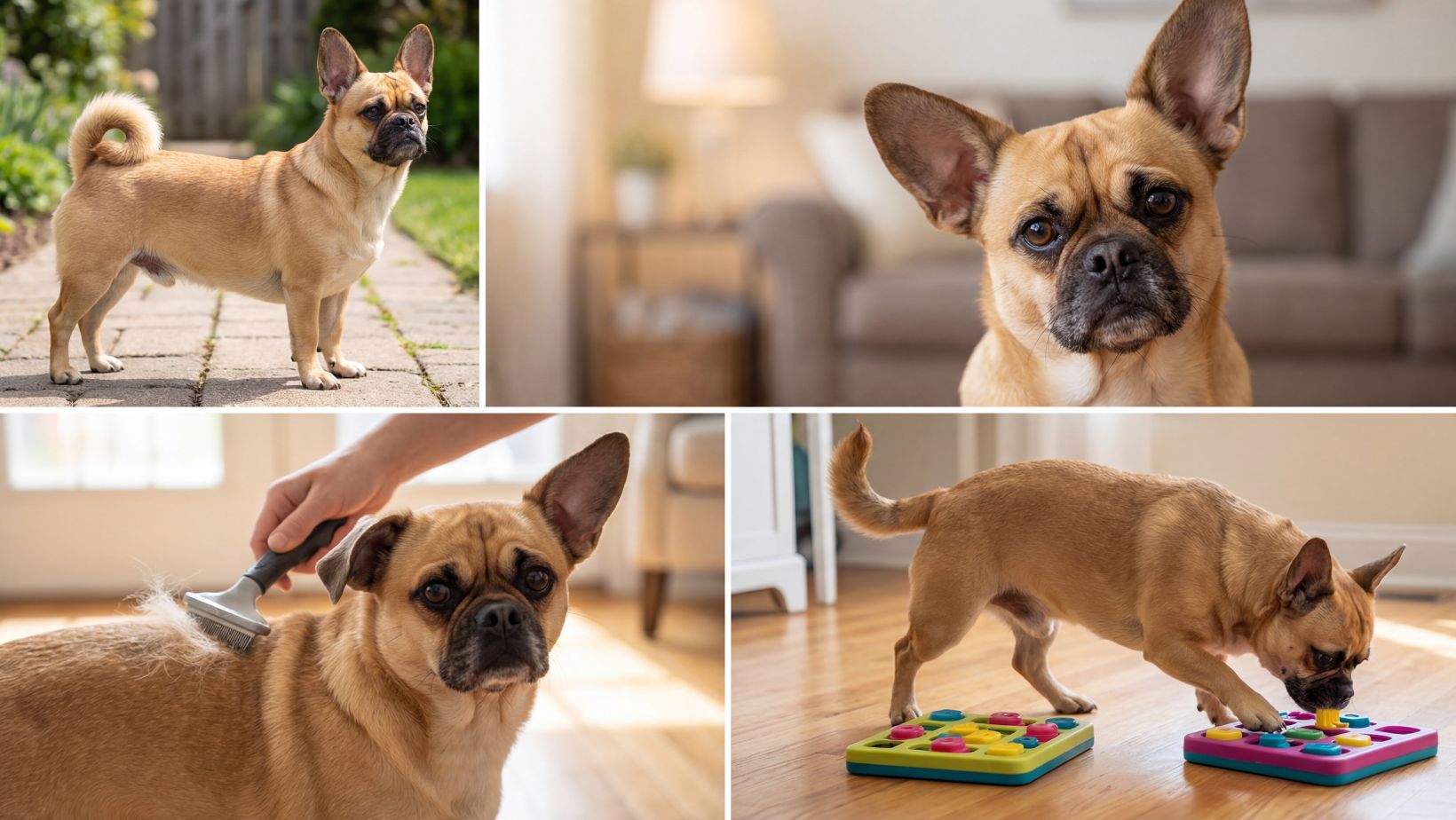
A Puggle vary in appearance depending on which parent breed dominates their genetics.
- Size: 10–15 inches tall, 15–30 pounds.
- Coat: Short, smooth, moderate shedding; colors include fawn, tan, black, and tri-color patterns.
- Face: Longer snout than a pug (reducing breathing issues), floppy ears, round expressive eyes, and sometimes a curled tail.
- Grooming: Weekly brushing, wrinkle cleaning for pug-like faces, and regular nail/ear maintenance.
Temperament & Personality of Puggles

Puggles are often described as the perfect balance of affection and energy. They typically love snuggling on the couch but also enjoy outdoor adventures thanks to their beagle lineage.
Key Traits
- Affectionate: Strong family bond, loyal, and thrives on companionship.
- Playful: Moderate energy levels; enjoy fetch, tug-of-war, and long walks.
- Social: Usually friendly with children, strangers, and other pets when socialized early.
- Curious: A beagle’s keen nose may lead them to follow scents, so secure outdoor spaces are essential.
Potential Challenges
- Stubborn streak: Both pugs and beagles can be independent thinkers, requiring patience during training.
- Separation anxiety: Puggles dislike being left alone for long periods.
- Barking tendencies: Inherited from beagles, some puggles are vocal, alerting owners to every sound
Health, Risks & Longevity of Puggles

The pugglew dogs are generally healthy, but hybrid breeding does not guarantee the elimination of inherited conditions.
Common Health Concerns
- Respiratory issues: Shorter muzzles can still cause breathing difficulties, though usually less severe than pure pugs.
- Obesity: Both parent breeds are prone to weight gain, requiring portion control and exercise.
- Hip dysplasia or patellar luxation: Joint problems may occur, especially in heavier puggles.
- Ear infections: Long floppy ears trap moisture, increasing infection risk.
- Eye problems: Pug genetics may cause dry eye, ulcers, or injuries.
Lifespan
Typically 10–15 years with proper care, diet, and preventive veterinary visits.

Last update on 2025-02-12 / * Affiliate links / Image source: Amazon Product Advertising API
Care, Diet & Grooming for Puggles

Puggles are relatively low-maintenance but need consistent grooming, a balanced diet, and regular exercise.
- Grooming: Brush 2–3 times a week; bathe every 4–6 weeks; clean wrinkles and ears to prevent infections.
- Diet: High-quality, portion-controlled meals to prevent obesity. Omega fatty acids support coat health.
- Exercise: Daily walks (30–45 minutes) and play sessions keep energy levels balanced and weight under control.
Training: Positive reinforcement methods work best for their intelligent yet sometimes stubborn nature
Ethical Buying & Adoption Considerations
The popularity of puggles has unfortunately led to irresponsible breeding and puppy mills.
Choosing Reputable Sources
- Only consider breeders who show both parent dogs, provide health clearances, and prioritize welfare over profit.
- Avoid breeders emphasizing “rare” colors or offering unusually cheap or “ready tomorrow” puppies.
- Consider adoption—many puggle rescues and shelters have puppies and adults needing homes.
For vetted breeders and trustworthy adoption listings, visit Pugs for Sale.
Fun Facts & Trivia About Puggles (Pug Beagle Mix)

They Sparked the Designer Dog Trend
Puggles were one of the first popular hybrid dogs in the U.S., helping pave the way for other designer breeds like Labradoodles and Goldendoodles.
Two Looks, One Breed Mix
Some puggles look like mini-beagles with shorter muzzles, while others resemble longer-legged pugs. Each litter produces a variety of looks.
Potential for Less Snoring (Sometimes)
A longer beagle-like snout can reduce breathing issues and snoring compared to a pure pug—though not always guaranteed.
Champion Escape Artists
Inheriting a beagle’s keen sense of smell and curiosity, puggles can be skilled at finding gaps in fences during outdoor adventures.
Hollywood Fame
Puggles gained widespread media attention in the early 2000s, with celebrities and talk shows showcasing the breed, fueling nationwide popularity.
Adopting or Buying a Puggle
The puggle breed are lovable, energetic companions, but their popularity has led to irresponsible breeding. Always prioritize health and welfare over quick purchases or “designer dog” hype.
For verified breeders, adoption opportunities, and guidance to avoid puppy mills, visit Pugs for Sale to make an informed decision and give a puggle a loving home.
FAQs About Puggles
No. Puggles are a hybrid cross between a purebred pug and a purebred beagle. They are not recognized as a standard breed by kennel clubs.
Often, yes. The beagle’s longer snout can help reduce respiratory issues, but some puggles still inherit flat-faced traits.
Yes, puggles are typically affectionate, playful, and friendly with children and other pets, making them ideal for families.
They typically reach 10–15 inches in height and weigh 15–30 pounds, depending on which parent they take after.
Most live 10–15 years with proper diet, exercise, and veterinary care.
No, puggles shed moderately year-round and are not considered hypoallergenic.
Puggles often inherit the beagle’s tendency to bark or howl, especially when following scents or seeking attention.
They require 30–45 minutes of daily activity to stay fit and prevent weight gain.
Prices typically range $800–$2,000, depending on breeder reputation. Always verify lineage and health testing.
Yes, many puggles end up in rescues and shelters due to their high-energy needs or initial owner mismatches. Adoption is often a better option than purchasing from unknown breeders.