Last updated on January 21st, 2026
- Introduction
- What Is a Chinese Pug Puppy? (Overview & Traits)
- Quick Facts About Chinese Pug Puppies
- Growth & Weight Milestones (0–12 Months)
- Vet Care, Vaccinations & Preventatives
- Feeding Your Chinese Pug Dog
- Sleep, Toilet Training & Daily Routine
- Socialization & Early Training Foundations
- Grooming & Hygiene for the Chinese Pug Breed
- Real Costs of Owning a Chinese Pug
- Finding Ethical Chinese Pug Puppy Sources
- Is a Chinese Pug Puppy Right for You?
- FAQs – Chinese Pug Puppies
- How much do Chinese Pug puppies cost?
- How big will a Chinese Pug puppy get?
- Are Chinese Pug puppies purebred?
- Do Chinese Pug puppies shed a lot?
- Are Chinese Pug puppies hypoallergenic?
- Are Chinese Pug puppies good with children?
- What health issues do Chinese Pug puppies face?
- How often should I feed my Chinese Pug puppy?
- Can Chinese Pug puppies be left alone?
- Where can I find Chinese Pug puppies for adoption or sale?
Introduction
Chinese Pug Puppies are not a separate breed to the pug and is simply another common name used to describe traditional Pugs. The name is most likely used due to the pugs ancient roots. Few dog breeds have as rich a heritage as the Pug, which traces its roots back over 2,000 years to ancient China, where these lovable, wrinkled companions were bred to warm the laps of emperors and royalty. The term “Chinese Pug Puppies” is often used today to highlight a Pug’s historical lineage or to describe purebred Pugs bred from Chinese bloodlines.
If you’re searching for Chinese Pug puppies for sale, planning to adopt, or simply want to learn more about this historically significant companion, this guide covers everything you need to know. From growth milestones, feeding, training, grooming, and health, to finding ethical breeders or adoption options, you’ll get a full picture of what it takes to raise a happy, healthy Chinese Pug puppy in their crucial first year.
🔗 Helpful links:
- Pugs for Sale – Verified safe listings for buying or adopting Chinese Pug puppies.
- Pug Breeders – Learn how to find reputable breeders and avoid scams.
- Pug History – Explore the fascinating history of Pugs and their Chinese origins
What Is a Chinese Pug Puppy? (Overview & Traits)
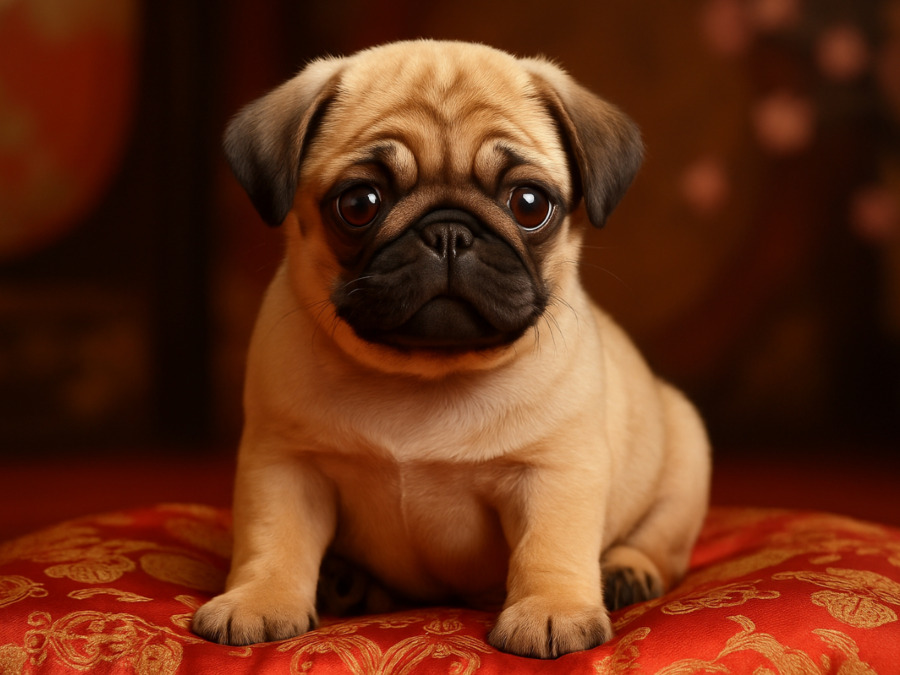
The Chinese Pug puppy is not a separate breed but a purebred Pug with Chinese lineage, tracing directly back to the breed’s origin as a companion to Chinese emperors during the Han Dynasty. These puppies share the same affectionate, loyal, and playful traits as standard Pugs recognized worldwide today.
Key Traits
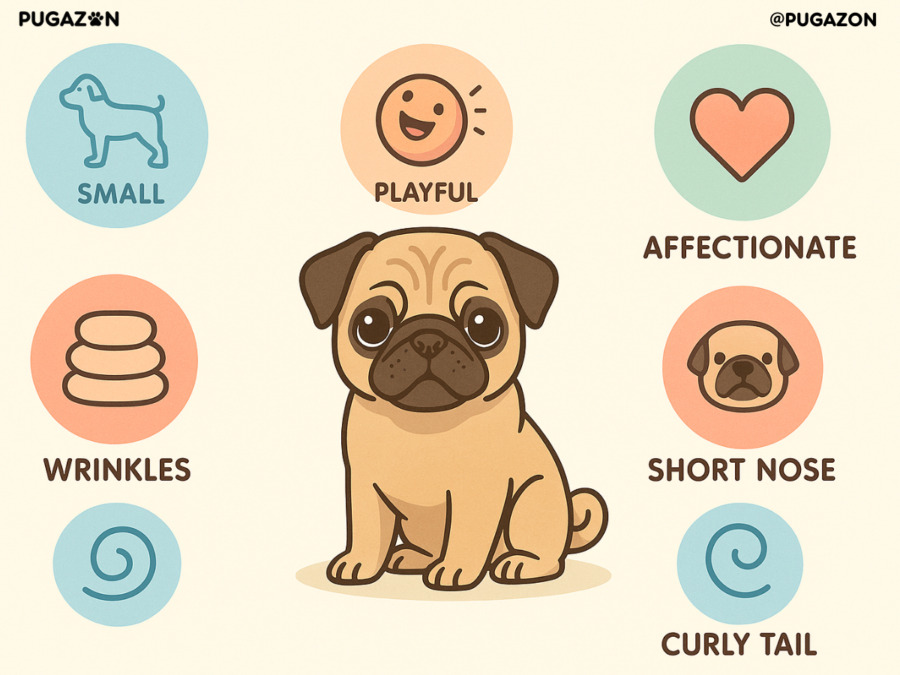
- Affectionate companion: Loves close contact, thrives on human interaction.
- Calm yet playful: Short bursts of energy followed by long cuddles.
- Small, stocky size: Perfect for apartment living and urban environments.
- Expressive face: Large, soulful eyes and characteristic wrinkled forehead.
- Charming and social: Gets along well with families, children, and other pets.
Chinese Pug puppies are true lapdogs with a personality that reflects their history as royal pets, bred for companionship, warmth, and loyalty.
Quick Facts About Chinese Pug Puppies
Trait | Details |
Breed Origin | Ancient China, bred for Chinese emperors and nobility |
Adult Size | 14–18 lbs (6–8 kg), 10–13 inches tall |
Energy Level | Moderate – prefers short daily walks and indoor play |
Temperament | Affectionate, loyal, occasionally stubborn |
Shedding Level | Moderate – year-round shedding with seasonal increases |
Grooming Needs | Regular brushing, wrinkle cleaning, nail trims |
Lifespan | 12–15 years |
Health Concerns | Breathing issues, obesity, hip dysplasia, eye injuries |
Best For | Families, singles, seniors looking for a loving companion |
Growth & Weight Milestones (0–12 Months)
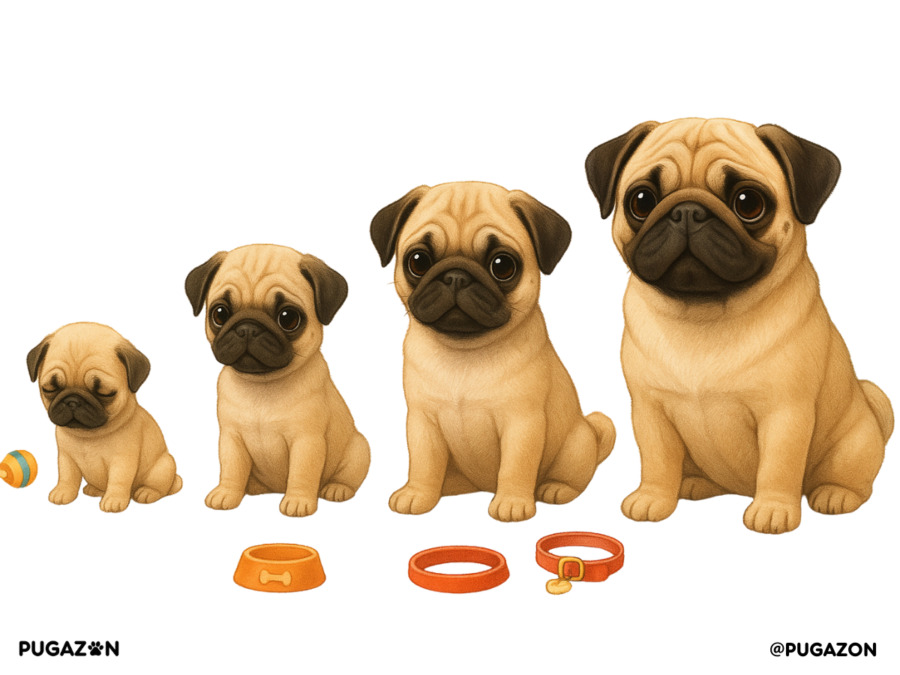
Chinese Pug puppies are small but grow quickly during their first year. By adulthood, they typically reach 14–18 lbs, with a sturdy, compact build.
Age | Average Weight | Growth Milestone |
8 weeks | 2–4 lbs | New home transition, first vet visit, early potty training |
3–4 months | 5–8 lbs | Teething, high playfulness, socialization period |
5–6 months | 7–12 lbs | Adolescence, may start showing stubborn tendencies |
7–12 months | 14–18 lbs | Reaches adult size, behavior patterns solidify |
Growth Tips
- Avoid overfeeding—Pugs are prone to rapid weight gain.
- Provide measured meals and limit high-calorie treats.
- Keep exercise low-impact to protect developing joints and hips.
- Visit your vet regularly to ensure healthy growth.
🔗 For verified breeder lists, adoption options, and scam prevention tips, visit our Pugs for Sale Guide.
Vet Care, Vaccinations & Preventatives
Proper vet care during your Chinese Pug puppy’s first year helps prevent common health problems and ensures they grow strong and healthy.
Recommended Vet Schedule
Age | Care Required |
8–10 weeks | First vet exam, DHPP vaccine, deworming, microchip |
12–16 weeks | Booster shots, rabies vaccination, start flea, tick, and worm prevention |
5–6 months | Spay/neuter consultation, early dental check, patella and hip evaluation |
6–12 months | Annual wellness exam, updated vaccinations, continued preventatives |
Potential Health Issues
- Brachycephalic breathing problems: Short snouts may cause overheating or labored breathing.
- Eye injuries: Prominent eyes are prone to scratches and infections.
- Hip dysplasia and patella luxation: Orthopedic issues can occur in some lines.
- Obesity: Closely monitor diet and weight to avoid strain on joints and breathing.
Choosing a breeder who performs health screenings on parent dogs greatly reduces these risks. Learn more on our Pug Breeders page.
Feeding Your Chinese Pug Dog
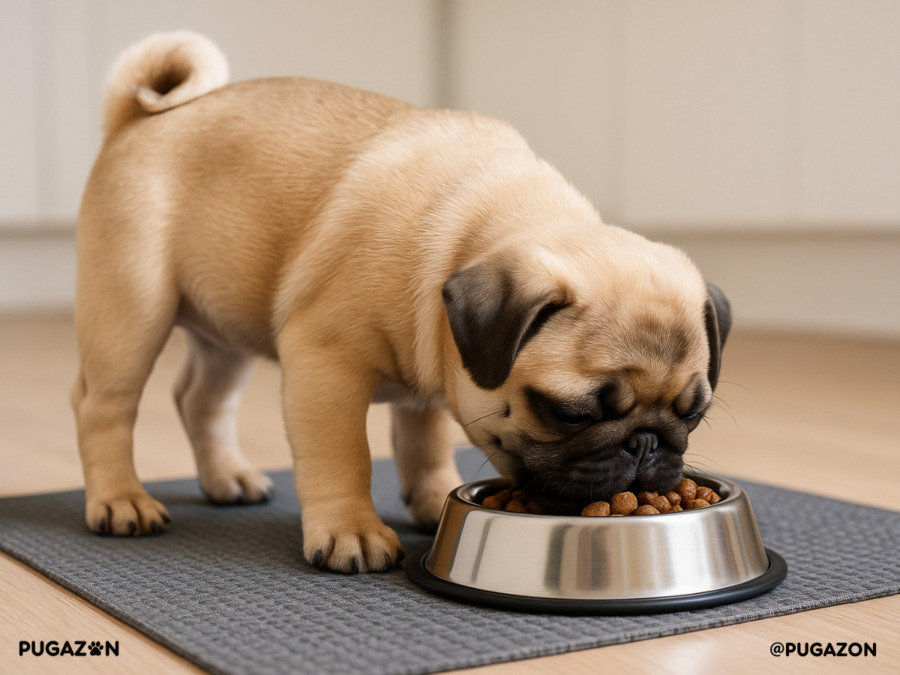
Good nutrition is essential to support growth and prevent obesity, a common issue in Pug breeds.
Feeding Schedule
- 8–12 weeks: 4 small meals per day.
- 3–6 months: 3 meals per day.
- 6–12 months: 2 meals per day as growth slows.
Diet Tips
- Use a high-quality small-breed puppy formula rich in protein and healthy fats.
- Avoid table scraps and excess treats.
- Slow-feeder bowls help prevent fast eating, reducing the risk of choking or bloating.
Age | Meals per Day | Approx. Daily Amount |
8–12 weeks | 4 | ¼–½ cup split across meals |
4–6 months | 3 | ½–1 cup split across meals |
6–12 months | 2 | 1–1¼ cups depending on size and activity level |
🔗 For more information on puppy development, see our Pug Health Care – Common Issues & Preventative Tips page.

Last update on 2025-02-12 / * Affiliate links / Image source: Amazon Product Advertising API
Sleep, Toilet Training & Daily Routine

Consistency is key when raising a Chinese Pug dog, as these smart yet stubborn pups thrive on structured routines.
Sleep Needs
- Expect 14–18 hours/day, including naps.
- Provide a cozy crate or dog bed in a quiet area.
- Keep bedtime calm with a potty break and quiet cuddles to encourage uninterrupted sleep.
Potty Training
- Take your puppy out every 2–3 hours, and always after meals and naps.
- Use a consistent potty spot and reward success with treats and praise.
- Crate training prevents nighttime accidents and speeds up housebreaking.
Sample Daily Routine
Time | Activity |
Morning | Potty break → breakfast → 5–10 min training session → nap |
Midday | Short walk → play session → snack → rest |
Evening | Dinner → cuddle time → quiet play → final potty break |
A predictable routine builds confidence, good manners, and emotional security during your puppy’s early months.
Socialization & Early Training Foundations
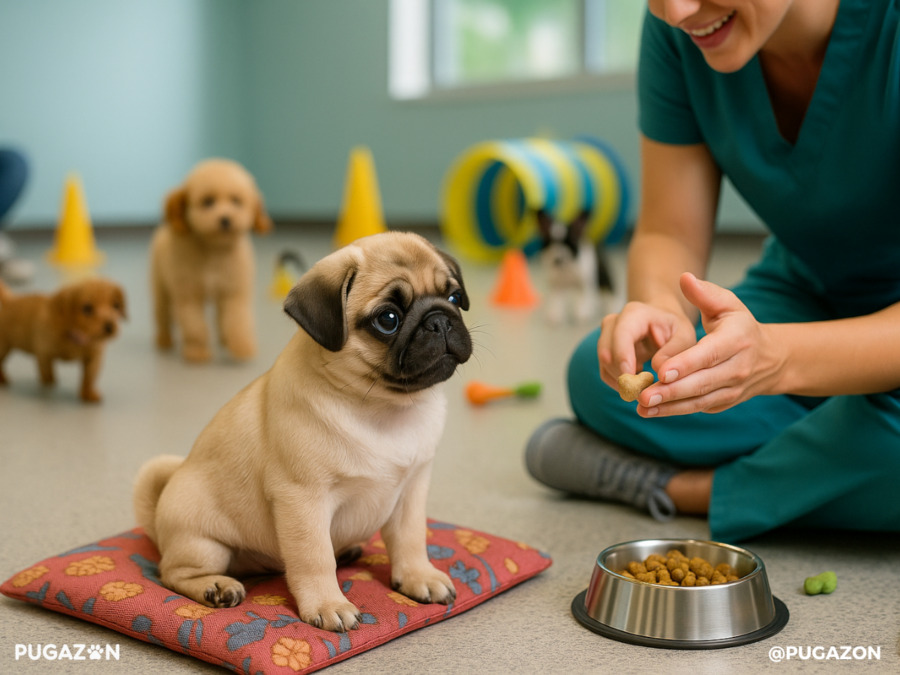
Chinese Pug puppies are naturally affectionate, social dogs, but like all Pugs, they can develop stubborn habits or clingy behaviors without early training. Structured socialization and positive reinforcement lay the foundation for a well-mannered adult Pug.
The Importance of Early Socialization
The first 8–16 weeks of life are crucial for a puppy’s development. Exposing your Chinese Pug puppy to new experiences builds confidence and reduces future anxiety or reactivity.
Goal | Practical Activities |
Meet different people | Introduce to adults, children, guests wearing hats, glasses, or backpacks |
Experience new sounds | Vacuum cleaner, hairdryer, TV, kitchen noises |
Explore various surfaces | Walk on grass, sand, tiles, wood floors |
Meet other dogs | Controlled puppy playdates with vaccinated, calm dogs |
Learn handling | Gently touch paws, ears, tail for future vet visits and grooming appointments |
Keep sessions short and positive, rewarding calm, curious behavior with treats and praise. Avoid overwhelming your puppy with too many new stimuli at once.
Basic Training for Chinese Pug Puppies
Pugs are intelligent but can be willful, making early, reward-based training essential.
- Name recognition: Reward your puppy for looking at you when called.
- Potty training: Use a consistent phrase like “go potty,” take them to the same spot, and reward success.
- Sit and stay: Short 3–5 minute sessions build focus.
- Leash walking: Introduce a harness early to avoid pulling and pressure on the throat.
- Discourage nipping: Redirect to chew toys and reward gentle behavior.
🧴 For recommended brushes, shampoos, and cleaning wipes, visit our Pug Grooming Products section.
Grooming & Hygiene for the Chinese Pug Breed
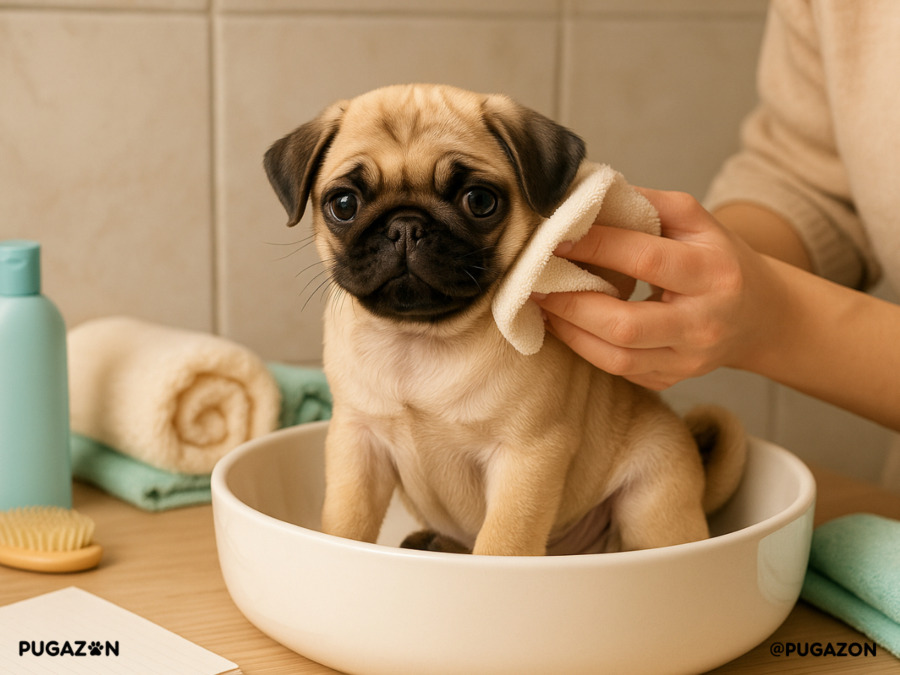
Pugs are known for their wrinkled faces, short coats, and expressive eyes, all of which require regular grooming to keep them healthy and comfortable.
Coat Care
- Brush 2–3 times/week to remove loose hair and reduce shedding.
- Pugs are year-round shedders, so frequent brushing keeps fur manageable.
- Use a soft-bristle brush designed for small, short-coated breeds.
Bathing
- Bathe every 4–6 weeks, or sooner if your puppy gets dirty.
- Use a mild puppy shampoo formulated for sensitive skin.
- Dry thoroughly, paying close attention to wrinkles and skin folds to avoid irritation or infections.
Wrinkle Care
- Clean facial folds daily or every other day using a damp cloth or vet-approved wipes.
- Keep wrinkles dry to prevent bacterial buildup and foul odors.
Eyes, Ears & Teeth
- Pugs’ prominent eyes can be prone to injury and tear staining; check daily for redness or discharge.
- Clean ears weekly to prevent wax buildup.
- Brush teeth daily or use dental chews to avoid tartar buildup and bad breath.
Grooming Task | Frequency |
Brushing | 2–3 times/week |
Bathing | Every 4–6 weeks |
Wrinkle cleaning | Daily or every other day |
Nail trimming | Every 2–3 weeks |
Ear cleaning | Weekly |
Tooth brushing | Daily |
🐾 Explore more Pug Training Products for treats, clickers, and harnesses tailored to small breeds like the Chinese Pug.
Real Costs of Owning a Chinese Pug

Welcoming a Chinese Pug puppy into your family comes with a variety of costs, including one-time expenses for setup and recurring costs for food, vet care, and grooming. Being financially prepared ensures a happy, healthy life for your pup.
One-Time Costs
- Purchase or adoption fee: $800–$2,000 from reputable breeders, lower for adoptions.
- Starter supplies: Crate, bedding, harness, bowls, toys, microchip ($250–$500).
- Initial vet visits: Exams, vaccinations, deworming ($200–$400).
Monthly/Annual Costs
- Food and treats: $30–$80/month.
- Preventative care: Flea, tick, and heartworm medications ($20–$50/month).
- Pet insurance: $25–$50/month.
- Grooming and hygiene: $30–$60/month (wrinkle wipes, shampoo, nail trims).
- Training classes: $100–$300 per basic course (optional but helpful).
Expense Category | Estimated Year 1 Cost |
Purchase/adoption | $800–$2,000 |
Supplies | $250–$500 |
Veterinary care | $600–$1,000 |
Food & treats | $400–$800 |
Grooming & hygiene | $300–$500 |
Insurance | $300–$600 |
Training | $100–$300 |
Avoid breeders advertising “cheap Chinese Pug puppies” or “rare colors” with no health documentation. Use Pugs for Sale and Pug Breeders to find safe, verified sources.
Finding Ethical Chinese Pug Puppy Sources

The demand for Pug puppies has led to unethical breeding practices, including puppy mills and online scams. Finding a reputable breeder or considering adoption ensures your puppy is healthy and well-socialized.
Signs of a Responsible Breeder
- Health checks for hereditary issues (breathing, hips, eyes).
- Puppies raised in a home environment, not cages.
- Provides vaccination records, microchip details, and contracts.
- Open to home visits or video calls to meet puppies and parents.
- Offers a health guarantee and a return policy.
Red Flags to Avoid
- Multiple litters constantly available year-round.
- Sellers unwilling to show breeding conditions or parent dogs.
- No proof of vaccinations or health testing.
- Extremely low prices or vague, “rare” claims.
Adoption Options
Consider Pug rescues or general dog shelters, many of which regularly have purebred Pugs or Pug mixes waiting for loving homes. Adoption is a rewarding, ethical choice that saves lives.
🔗 Explore:
- Pugs for Sale – Verified breeder and adoption listings.
- Pug Breeders – How to choose an ethical breeder.
- Pug History – Learn more about their royal origins
Is a Chinese Pug Puppy Right for You?

Chinese Pug puppies are lovable, loyal companions with a fascinating history. But while they make fantastic family pets, they’re not for everyone. Understanding their pros and potential challenges will help you decide if this ancient lapdog is right for you.
Reasons to Love a Chinese Pug Puppy
- Rich heritage: A living piece of history, originally bred for Chinese emperors.
- Affectionate and loyal: Loves snuggling, thrives on human interaction.
- Small, adaptable size: Perfect for apartments, urban living, and travel-friendly lifestyles.
- Great with kids and other pets: Social and loving with proper introductions.
- Moderate exercise needs: Short daily walks and indoor play are enough.
Potential Challenges
- Prone to health issues: Breathing difficulties, obesity, and eye problems require careful management.
- Shedding: Regular brushing is needed to manage fur year-round.
- Stubborn tendencies: Early, positive training is essential.
- Heat sensitivity: Avoid prolonged outdoor activity in hot weather.
If you’re ready for consistent training, regular vet visits, and lots of love and lap time, a Chinese Pug puppy can be an ideal lifelong companion.
FAQs – Chinese Pug Puppies
Chinese Pug puppies typically cost $800–$2,000 from reputable breeders, with prices influenced by pedigree, location, and breeder reputation. Adoption fees are generally lower, averaging $100–$500. Beware of “cheap Chinese Pug puppies” advertised online, as these often come from puppy mills or unverified sellers with no health guarantees. Always use Pugs for Sale for safe listings and read our Pug Breeders guide before committing to a purchase.
Chinese Pug puppies typically reach 14–18 lbs (6–8 kg) by adulthood, standing 10–13 inches tall. Their compact, muscular build makes them sturdy despite their small size. Growth usually stabilizes by 12 months, with proper diet and exercise helping to maintain a healthy weight.
Yes, Chinese Pug puppies are purebred Pugs with lineage tracing back to ancient China, where Pugs were bred as companions for Chinese royalty. Today, they share the same breed standard recognized by the AKC and The Kennel Club UK as other Pugs, with differences mostly in bloodline origins rather than physical characteristics.
Yes, Pugs are year-round shedders, with heavier shedding during spring and fall. Regular brushing 2–3 times per week reduces loose fur and keeps the coat healthy. Investing in a good deshedding brush and using vet-recommended shampoo can help manage shedding effectively. See our Pug Grooming Products page for recommended tools.
No, Chinese Pug puppies are not hypoallergenic. Like all dogs, they produce dander and saliva that can trigger allergies. Frequent grooming, vacuuming, and using air purifiers can help allergy sufferers manage symptoms, but those with severe allergies should consult breeders about testing exposure before adoption.
Yes, Pugs are famously affectionate and excellent with children. They’re playful, sturdy for their size, and thrive on family interaction. Supervise playtime with toddlers to avoid accidental injuries, as Pug puppies are small and can be easily stepped on or dropped.
Pugs are prone to brachycephalic breathing problems, eye injuries, dental crowding, hip dysplasia, and obesity. Ethical breeders screen parent dogs for hereditary conditions to reduce these risks. Regular vet visits and maintaining a healthy weight are essential. Learn more on our Pug Health Care page.
Feed your puppy 4 small meals/day until 12 weeks old, 3 meals/day until 6 months, and then 2 meals/day for life. Use high-quality, small-breed puppy food and avoid free-feeding to prevent obesity. Puzzle feeders and portion control help maintain a healthy weight. Visit Pug Training Products for feeding solutions.
Chinese Pug puppies form strong bonds with their owners and may develop separation anxiety if left alone too long. Avoid leaving young puppies for more than 2–3 hours. Gradually increase alone time as they mature and provide toys, comfort items, or a sitter/dog walker when needed.
Start with reputable breeders who perform health testing and provide documentation, listed on Pugs for Sale. You can also check Pug rescues or breed-specific organizations, which often have purebred Pugs, including those of Chinese lineage, available for adoption. Avoid online sellers with vague information or “rare” claims.