Last updated on January 21st, 2026
- Introduction: The Timeless Charm of the Pug
- The Ancient Origins of Pugs in Imperial China
- The Story of Pugs Begins – A Royal Breed Is Born
- Pug Ancestors & Ancient Dog Breeds
- From Palaces to Temples: The Tang & Song Dynasty Surge
- Qing Dynasty: Pugs Guarded by Imperial Decree
- Mapping the Imperial Pug Timeline in the History of Pugs
- A Breed Rooted in Ceremony and Royalty
- Silk Road to the Throne: Pugs Enter the West
- Pugs in the Dutch Golden Age and European Courts
- Pugs and Royalty: From William of Orange to Queen Victoria
- The Royal Rise of the Pug in Europe
- William of Orange and the Heroic Pug Legend
- From Dutch Nobility to Global Courts
- Queen Victoria and the Victorian Pug Boom
- Royalty’s Role in the Breed Standard
- Legacy of Royal Affection
- Victorian Era to Early 20th Century: Shifting Roles of the Pug
- From Elite Status Symbol to Middle-Class Mainstay
- The Rise of Dog Shows and Breed Clubs
- The Edwardian Pug: Status Meets Sentiment
- Exported Love: Pugs in America and Beyond
- The Cultural Shift in Pug Representation
- The Decline and Revival of the Pug in the 20th Century
- Pugs in Pop Culture History: Comics, Cartoons & Cameos
- The Animated Pug Takeover
- Comic Strips, Memes & Online Domination
- Cameos in Major Films & Franchises
- Designer Dogs in Designer Frames
- Cultural Symbolism Meets Screen Stardom
- Pugs in Fashion, Advertising & Elite Circles
- The Rise of the Internet Pug: Viral Fame & Meme Domination
- Haute Dog: The Pug’s High-Fashion Evolution
- Andy Warhol’s Pug Obsession
- From Snack Ads to Super Bowl Spots: Pugs in Advertising
- Elite Circles: Artists, Celebrities & Lifestyle Icons
- The Face of Lifestyle Branding
- 💼 Marketing Matrix:
- The Pug as Fashion Philosophy
- The Perfect Storm: Why Pugs Were Born for the Internet
- Doug the Pug: The Four-Legged Social Media Mogul
- Meme Culture & Reaction Gifs: Pugs as Digital Emoticons
- Pugs in Pop Music, Film, and Internet Ads
- The Pug as a Symbol of Internet Nostalgia
- Pug Merch & Monetization: Turning Likes into Lifestyle
- Modern-Day Pugs: Health, Breeding & Global Popularity
- A Compact Canine With Complicated Needs
- Popularity Rankings: Still Riding High
- Health Issues: Not Just a Cute Face
- The Ethical Breeding Movement
- Global Fanbase & Social Influence
- Rescue Organizations & Advocacy
- Modern-Day Perception: Companion or Concern?
- The Takeaway
- Cultural Interpretations of Pugs Across Continents
- A Breed That Speaks Many Cultural Languages
- Asia: Sacred Guardians and Symbols of Nobility
- Europe: Aristocracy, Symbolism, and Satire
- The United Kingdom: Victorian Sentimentality to Modern Nostalgia
- North America: From Couch Clowns to Meme Kings
- Latin America: Status and Celebration
- Africa & the Middle East: Emerging Popularity
- A Mirror of Our Values
- The Globalized Pug Identity across History
- Why Pugs Remain Timeless in the Digital Age
- From Scrolls to Scrolls: Pugs Across Media
- Meme Machines and Algorithm Whisperers
- A Breed That Breeds Connection
- The Marketplace of Pugness
- Eternal Branding for an Eternal Breed
- Final Word: Why the Pug Endures
- FAQ – The History of Pugs
- Where do pugs originally come from?
- Why do pugs have wrinkled faces and short muzzles?
- Were pugs really owned by royalty in Europe?
- What was the role of the pug in the House of Orange?
- Were pugs involved in any historical wars or conflicts?
- How did the Victorians influence the pug breed?
- How did the pug breed nearly vanish—and how was it saved?
- Why are pugs so popular in art and pop culture?
- How has the pug’s appearance changed over time?
- What makes pugs so culturally adaptable across regions?
- Final Note: The Pug’s Legacy
Introduction: The Timeless Charm of the Pug
The history of pugs isn’t just a story of wrinkled faces and curly tails—it’s a journey through empires, art, aristocracy, and algorithms. Few breeds can claim to have lounged beside emperors, been immortalized in oil paintings, and grinned their way to meme superstardom.
From the lantern-lit palaces of ancient China to the glowing phone screens of Gen Z, pugs have never gone out of style. They’ve seen dynasties rise and fall, trotted through royal courts, and more recently, strutted down red carpets in haute couture harnesses. So what gives this squishy-faced breed such enduring power?
This long-form guide will take you paw-in-paw through the ages, unpacking every twist and tail-wag along the way. We’ll explore their origins as prized companions of Chinese emperors, their migration along ancient trade routes, their royal comeback in Europe, and their unlikely takeover of Instagram.
Whether you’re a pug owner, pug dreamer, or just here for the historical ride, we promise facts, fluff, and a few snorts of laughter.
🐾 Pug Fact #1: The name “pug” is believed to come from the Latin pugnus, meaning “fist,” a reference to their squished little face that (apparently) resembles a clenched hand. Or maybe someone just tried to punch a cloud.
The Ancient Origins of Pugs in Imperial China
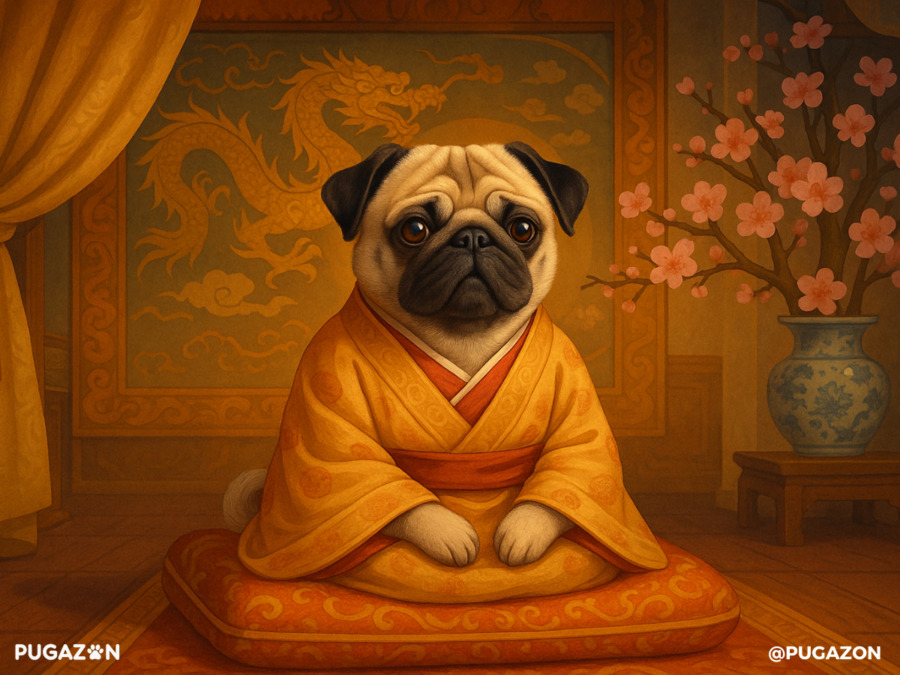
Long before they became international celebrities lounging in modern luxury, pugs were revered as sacred companions behind the gilded walls of Chinese palaces. Their journey began not with glitz or glamour—but with a purpose deeply rooted in ritual, symbolism, and royal status. The history of pugs goers back to ancient times which we will explore in more detail.
The Story of Pugs Begins – A Royal Breed Is Born
In the Han Dynasty (206 BCE–220 AD), Chinese nobility favored small, flat-faced lapdogs with curled tails and wide-set eyes—dogs known as the Lo-sze. These early ancestors of the pug weren’t just pets. They were status symbols, often cared for by palace eunuchs, housed in private quarters, and treated with reverence equal to members of the royal court.
This period marks one of the earliest historical records of brachycephalic (short-muzzled) dogs in East Asia. Ancient scrolls, pottery, and imperial carvings depict compact, muscled dogs with strikingly similar features to modern pugs—underscoring just how long these unique characteristics have been preserved.
📜 Fun Fact: Some Lo-sze were assigned their own servants and were reputed to receive higher quality meals than many of the emperor’s advisors!
Pug Ancestors & Ancient Dog Breeds
While the Molossian dogs of ancient Greece often get referenced in Western canine history, the East had its own unique lineage. The Lo-sze likely descended from mastiff-type guardian dogs, bred for compactness and affection rather than size or aggression. These early lapdogs—somewhere between temple guardian and pampered pet—were eventually refined through generations of selective breeding, emphasizing traits like a wrinkled brow, shortened snout, and curled tail. This is where the history of pugs begins.
Their presence in temples and Buddhist rituals grew steadily over time, eventually linking these dogs to spiritual purity and serenity—two values deeply rooted in Chinese philosophical and religious life.
From Palaces to Temples: The Tang & Song Dynasty Surge
The history of pugs during the Tang Dynasty (618–907)—an era of cultural brilliance and artistic expression—Lo-sze lapdogs became prominent in Buddhist monasteries and were associated with good fortune and protection. This was the golden age of East Asian art, and flat-faced dogs appeared frequently in sculpture, poetry, and even official court portraiture.
In the following Song and Ming dynasties (960–1644), the history of progress progressed and the trend solidified. Small companion dogs became synonymous with elegance, loyalty and peace. These were not merely household pets—they were reflections of refinement, a sign that the household possessed taste, culture, and access to elite breeding lines.
🐾 Verified Insight: According to museum collections and art historians, Tang-era figurines often depict pug-like dogs in ceremonial poses, indicating the hisotry of pugs and their role in temple rituals and court life.
Qing Dynasty: Pugs Guarded by Imperial Decree
By the time the Qing Dynasty (1644–1912) took the reins, the Lo-sze had become so treasured that imperial laws forbade commoners from owning them. These dogs—often painted in golden silk robes or seen beside Qing empresses—were highly restricted palace treasures, guarded as fiercely as state secrets.
Foreign diplomats and traders from Portugal, the Netherlands, and later England were sometimes gifted these lapdogs as signs of political favor. This exchange sparked what would later become the global spread of the pug breed, with early European descriptions marveling at their “wrinkled faces and monkey-like expressions.”
🧳 Did You Know? The earliest pugs in history were introduced to Europe via Dutch trading ships and were descendants of Qing palace dogs. These pugs were often given as diplomatic gifts or stolen from royal households during times of unrest. The history of pugs is filled with many similar stories which shows how impactful this breed was across the centuries.
Mapping the Imperial Pug Timeline in the History of Pugs
Era | Significance |
~400 BCE (Zhou–Han Period) | Early mastiff-type dogs begin appearing in China. |
Han Dynasty (206 BCE–220 AD) | Lo-sze lapdogs emerge as elite companions of nobility. |
Tang Dynasty (618–907) | Companion dogs become part of Buddhist rituals and temple life. |
Song & Ming Dynasties (960–1644) | Flat-faced lapdogs are treasured by emperors and elites. |
Qing Dynasty (1644–1912) | Dogs resembling modern pugs are kept under imperial guard and exported as diplomatic gifts. |
A Breed Rooted in Ceremony and Royalty
What made the early Lo-sze so special wasn’t just their looks—it was their symbolic role in a culture that valued harmony, restraint, and divine order. In the history of pugs these dogs were meticulously bred, pampered beyond belief, and infused into the very spiritual fabric of Chinese aristocracy.
In many ways, the pug’s enduring appeal today—its soulful eyes, charming demeanor, and loyal heart—can be traced directly
Cultural Echo: In traditional Chinese symbolism, dogs were often seen as guardians of the afterlife and bringers of joy. Pugs, with their distinctive appearance, became a physical manifestation of this belief—a bridge between this world and something greater. The history of pugs is not just connected to this world but also the afterlife in religious ideology.
Silk Road to the Throne: Pugs Enter the West
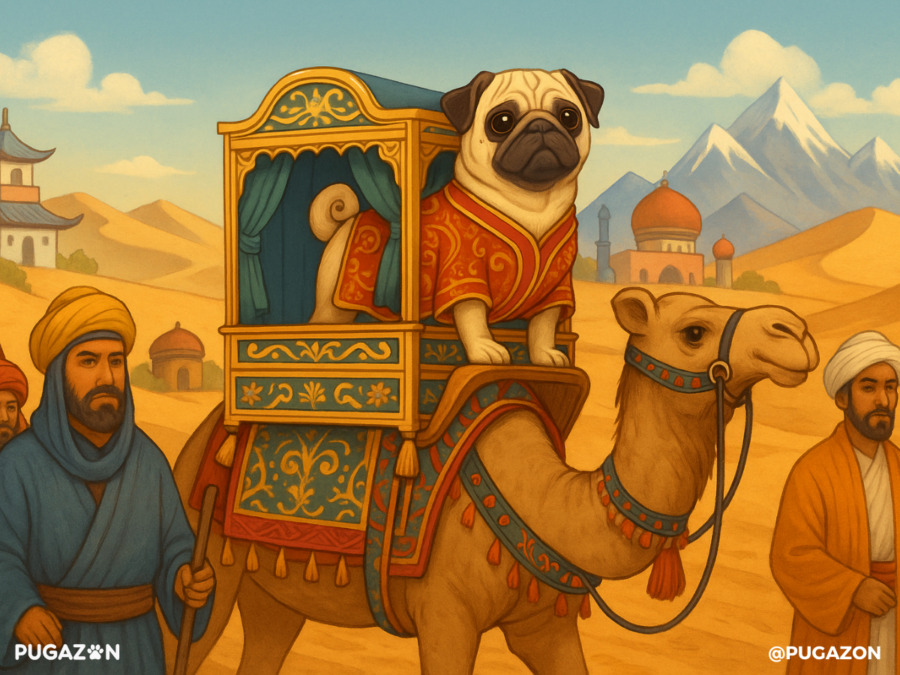
The Hisotry of Pugs on the Silk Road
With the fall of various Chinese dynasties and the rise of global trade routes, pugs began to wander. Their journey westward wasn’t just a case of “cute dog gets adopted by tourist”—it was part of the wider cultural exchange that defined the Silk Road.
Pugs found their way into Persia, Tibet, and eventually to Europe via merchant ships, often brought as exotic gifts or diplomatic offerings. Portuguese traders, Dutch East India Company sailors, and Buddhist monks all played a role in transporting these curly-tailed charmers into new courts and cultures.
One of the first major European pug sightings comes from the 16th century, when Dutch traders returning from China brought back small, flat-faced dogs. The Dutch word for pug was “mopshond,” which means “to grumble” — likely due to their charming snorty soundtrack.
It didn’t take long for pugs to find themselves in high places. Royal families across the continent were captivated by their appearance and personality. They weren’t just pets—they were diplomatic tools, luxury gifts, and sometimes even political symbols.
The breed’s adaptability helped. Whether curled up in a gilded carriage or napping on velvet cushions beside a smoking cannon, pugs handled both war rooms and tea rooms with equal poise.
Noteworthy Details:
- Pugs are believed to have arrived in Europe around 1500s–1600s, via trading routes between China, India, and Europe.
- Their small size, unique appearance, and easygoing temperament made them an instant hit among aristocrats and merchants alike.
- Paintings from this era show pugs with longer legs and noses—early variations before standardized breeding.
🐾 Pug Joke #3: Historians say pugs traveled the Silk Road by caravan. Pugs say they were carried the whole way—why walk when you’re royalty?
Pugs in the Dutch Golden Age and European Courts
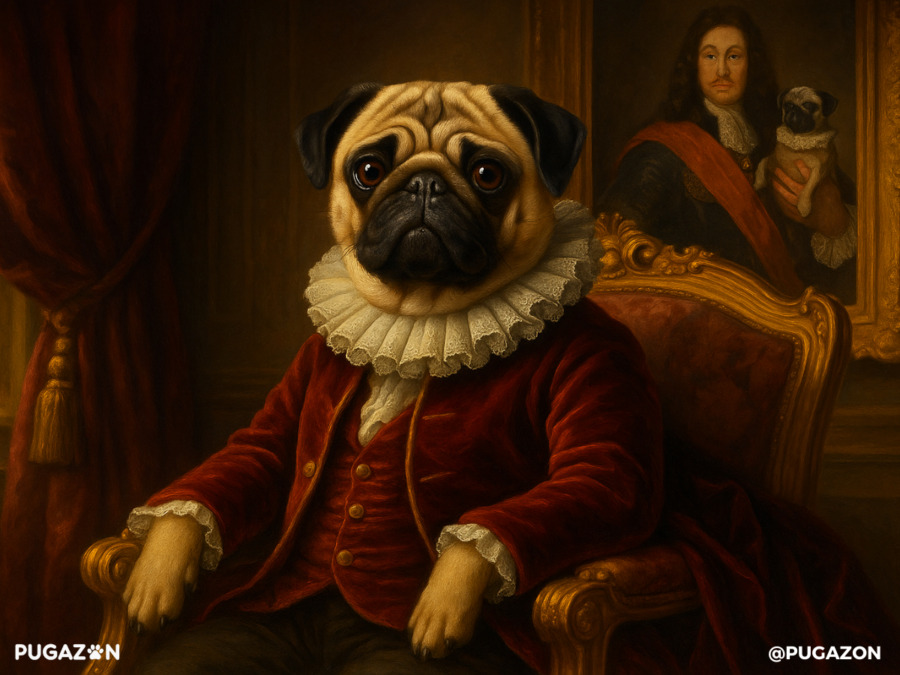
The History of Pugs in the 17th Century
As Europe flourished during the Dutch Golden Age, so too did the hsitory of pugs. By the 17th century, this wrinkled-faced dog had gone from imperial Chinese lapdog to symbol of European aristocracy—especially among the Dutch elite.
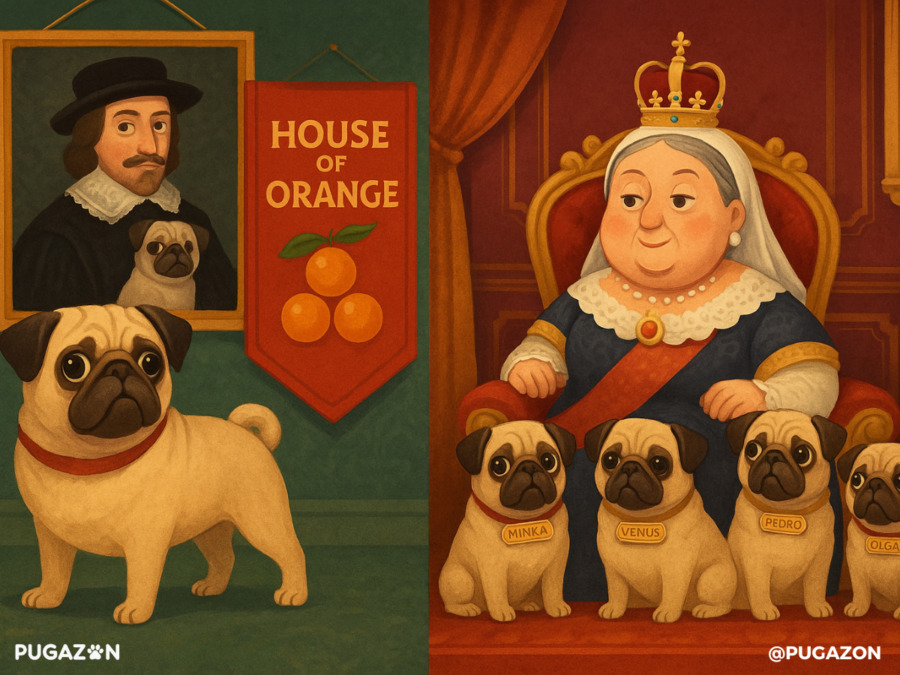
The House of Orange-Nassau, rulers of the Dutch Republic, played a pivotal role in popularizing the pug across Europe. It was here that the breed’s political career began—yes, political. According to legend, a pug named Pompey saved the life of William the Silent, the Prince of Orange, by barking to warn of an assassin’s approach. As the story goes, this cemented the pug as a symbol of loyalty and protection.
In fact, the pug became so iconic to the House of Orange that they included the breed in family portraits and even engraved one at the feet of William the Silent on his tomb. Through political alliances, the pugs followed the Oranges into England—setting the stage for their royal invasion.
As the pug made its rounds through Europe, its popularity skyrocketed among nobility:
- In Italy, pugs were often dressed in matching livery with footmen and used to pull miniature carts in lavish processions.
- In France, Madame de Pompadour, mistress to Louis XV, reportedly adored pugs and helped further the breed’s fashionable image.
- In Spain and Austria, the breed was depicted in court paintings alongside royals, symbolizing grace, status, and devotion.
Artists like Hogarth, Goya, and William Beechey often captured pugs in their portraits. Hogarth, in particular, featured his beloved pug “Trump” in many works—most famously in The Painter and His Pug, where Trump sits at his feet, as stoic and unimpressed as ever.
Pug Symbolism in Art
The presence of pugs in artwork wasn’t accidental. These dogs were chosen not just for their looks, but for their symbolic value—loyalty, charm, and the rising status of companion animals in human society.
Their wrinkly expressions were seen as quirky and intellectual—matching the era’s desire to balance beauty with wit. In many ways, pugs became a living accessory in portraits, representing wealth, refinement, and the luxury of leisure
🐾 Pug Fact #4: In the 1700s, some pugs were known to wear tiny velvet jackets and were taught to perform courtly gestures like curtsies or paw salutes. Yes, these were the original “paw-liticians.”
Pugs and Royalty: From William of Orange to Queen Victoria
The Royal Rise of the Pug in Europe
By the late 16th century, the hisotry of pugs had already begun its transformation from imperial Chinese lapdog to European royal icon. While earlier sections detailed how pugs were gifted to Westerners via trade routes and diplomatic exchanges, it was their adoption by royalty that solidified their status as elite companions.
Pugs didn’t just walk into palaces—they marched in with purpose, velvet collars, and an uncanny ability to win over monarchs and aristocrats alike.
William of Orange and the Heroic Pug Legend
One of the most famous (and likely embellished) tales of pug loyalty surrounds William of Orange—later King William III of England. During the 1570s, it’s said his pug, Pompey, thwarted an assassination attempt by barking loudly and waking him just in time.
While historians debate the full accuracy of this account, the story endures as a pivotal moment in cementing the breed’s reputation for fierce loyalty. Whether myth or truth, William so revered his pug that Pompey was even memorialized at his feet in his tomb—a detail preserved in multiple historic references.
The House of Orange would go on to popularize the breed throughout the Netherlands, where the pug (known as the mopshond) became a symbol of the Dutch royal family.
From Dutch Nobility to Global Courts
As Dutch trade and influence expanded in the 17th century, so did the pug’s presence across Europe. Paintings from the Dutch Golden Age often featured pugs nestled into domestic scenes of wealth and refinement. These weren’t working dogs—they were lapdogs of leisure, indicators of taste, and sometimes even adorned with miniature livery to match their owners.
The breed was soon embraced in Spain, France, and beyond, finding its way into the courts of European nobility who saw the pug as a delightful and exotic alternative to native breeds. In France, they were often associated with the Bonapartes, and in Italy, noblewomen would carry them as pampered accessories—an early sign of the pug’s crossover into fashion and cultural symbolism.
Queen Victoria and the Victorian Pug Boom
Fast forward to the 19th century, and the British Empire was in full bloom—along with its obsession with pedigree pets. Queen Victoria wasn’t just a monarch with a love for animals; she was a trendsetter. She is credited with owning multiple pugs, including ones named Venus, Olga, Pedro, and Fatima.
Unlike previous royals, Queen Victoria’s influence extended beyond aristocracy. What she admired, the public admired. Her love for pugs helped ignite a Victorian-era craze for the breed. Pugs were bred locally, featured in pet shows, and even depicted in family portraits and satirical illustrations of the time.
One of the defining shifts during her reign was the selective breeding of pugs with more compact bodies, flatter faces, and tightly curled tails—setting the foundation for the modern pug aesthetic. This selective breeding helped distinguish British pugs from their earlier Dutch and Chinese counterparts.
Royalty’s Role in the Breed Standard
The influence of these royal and noble associations cannot be overstated. Monarchs, duchesses, and barons didn’t just adopt pugs—they shaped the breed’s physical and cultural identity. By the end of the 19th century:
- Pugs had appeared in over 50 known European paintings across noble collections
- British breed clubs were formalizing appearance standards
- The pug was increasingly seen as a companion animal rather than a status symbol or curiosity
Their consistent portrayal in royal portraits helped etch their silhouette into the visual memory of Western nobility—and by extension, into the hearts of everyday citizens.
Legacy of Royal Affection
Today, pugs remain one of the most beloved small breeds globally, and much of that can be traced to their royal roots. The endorsement of figures like Queen Victoria didn’t just elevate the breed—they immortalized it. Every time a pug grunts their way onto a velvet couch, there’s a little echo of a time when they were palace mainstays.
In short: they didn’t just sit on thrones—they ruled hearts across empires.
Fun Fact: According to breed historians, Queen Victoria’s personal involvement with pug breeding led to the rise of the apricot-fawn coat color as a preferred trait among British pugs in history—a color still favored today by many UK breeders.
Victorian Era to Early 20th Century: Shifting Roles of the Pug
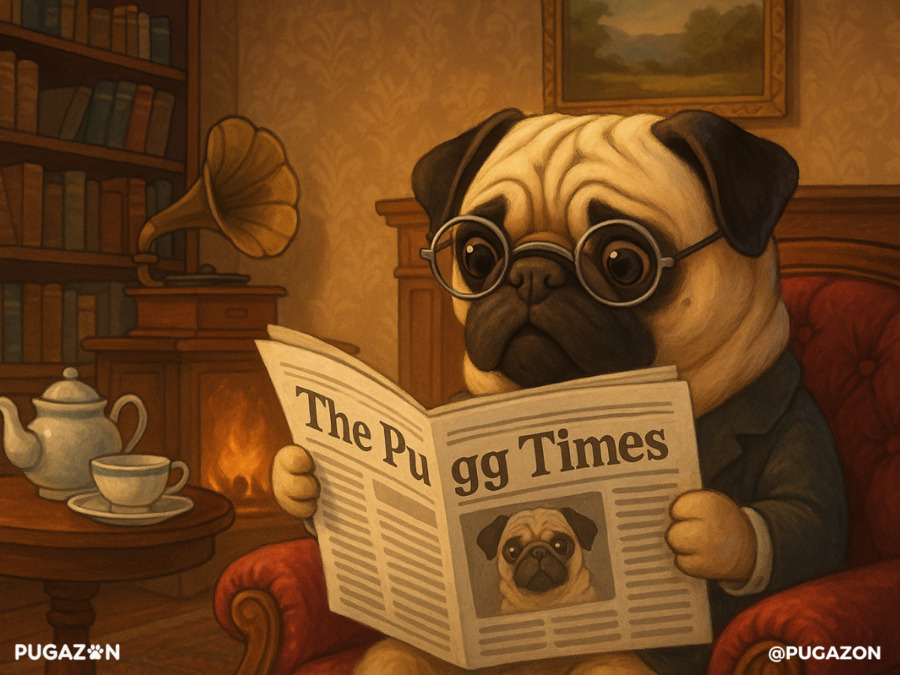
From Elite Status Symbol to Middle-Class Mainstay
As the Victorian era progressed, so too did the democratization of pet ownership. No longer confined to palaces and aristocratic salons, the history of pug evolved and found itself nestled into the hearts—and laps—of an increasingly pet-loving public. With the Industrial Revolution came a new middle class, and with it, new ideals of domestic life. The pug, once a breed flaunted by royalty, began its slow transition into a household companion for the masses.
Victorian values celebrated gentility, loyalty, and order—traits the pug embodied in full. Compact, charming, and never too far from a fireside nap, they became the perfect dog for newly urban families seeking companionship and status without extravagance.
The Rise of Dog Shows and Breed Clubs
One of the most transformative trends of this era was the formalization of dog breeding and competition. The first official dog show in England was held in 1859, and by the 1870s, breed standards and kennel clubs were flourishing. Queen Victoria’s personal interest in pedigree dogs gave these activities legitimacy—and pugs, of course, were among the featured stars.
In 1873, the Kennel Club (UK) was founded, leading to the standardization of dog breeds across Britain. Pugs were categorized and judged based on newly formalized traits: short muzzle, curled tail, smooth coat, and distinct coloring—particularly fawn with black mask or solid black.
Selective breeding intensified. The once longer-legged, leaner pugs of earlier Dutch and Chinese varieties were gradually replaced by shorter, stockier versions with more pronounced features. While adorable, this shift also began to introduce the structural challenges that would later be associated with the breed—shortened snouts, breathing issues, and compact bone structure.
The Edwardian Pug: Status Meets Sentiment
As the Victorian age gave way to the Edwardian period (early 1900s), the pug retained its place as a symbol of refined affection. But where earlier representations emphasized wealth and control, the Edwardian pug reflected a gentler, more sentimental vision of pet ownership.
Paintings, postcards, and family portraits frequently included pugs lounging in parlor rooms or being doted on by children—offering a window into the growing emotional bond between humans and dogs. These weren’t just pets; they were considered members of the family, with names, personalities, and Christmas stockings of their own.
Their manageable size made them ideal for urban life, especially as apartment living became more common in densely populated cities like London and New York. As people’s lives grew more fast-paced and space-constrained, pugs became the perfect breed: loyal, low-maintenance, and endlessly amusing.
Exported Love: Pugs in America and Beyond
While Britain remained the breeding ground of pug popularity, the breed’s reputation crossed oceans. In the late 19th century, pugs were imported to the United States, where they were officially recognized by the American Kennel Club (AKC) in 1885. Though not as explosively popular in the U.S. as in England, they maintained a loyal following among elite circles and city dwellers.
By the early 1900s, pugs were also seen in Canada, Australia, and parts of Western Europe—often owned by artists, writers, and diplomats who appreciated their quirky expressions and companionable temperament.
In essence, the pug had gone global. Its brand—compact, comedic, and classy—fit snugly into a rapidly modernizing world.
The Cultural Shift in Pug Representation
Victorian and Edwardian literature frequently referenced dogs as symbols of loyalty, morality, and domestic bliss. Though not always mentioned by breed, pugs appeared in visual culture—paintings, lithographs, and advertisements—as charming characters with expressive faces and undeniable charisma.
Unlike working breeds, the pug’s role was almost entirely emotional. They weren’t hunters or herders. They were comforters, clowns, and couch connoisseurs. In many ways, they paved the way for the modern idea of the “companion dog”—an animal kept not for function but for love.
This emotional bond is perhaps the most lasting legacy of the pug in this time period. As the world moved toward war, industrial change, and social upheaval, pugs represented something simple and grounding: a loyal face at the foot of the bed and the comic relief of a snort or
Did You Know? The term “lapdog” became a household phrase in the late 19th century, and pugs were the poster pups for this shift—appearing in parlors, laps, and artist studios throughout Europe and beyond.

Last update on 2025-02-12 / * Affiliate links / Image source: Amazon Product Advertising API
The Decline and Revival of the Pug in the 20th Century
The 20th century was a turbulent time for dog breeds across the world, and pugs were no exception. While their aristocratic presence had been firmly established in royal courts throughout Europe by the late 19th century, the dawn of global conflict and industrialization dramatically reshaped their path.
A Quiet Fade During Global Unrest
With the outbreak of World War I, many dog breeds experienced a sharp decline due to economic hardship and a redirection of societal priorities. Pugs, once adored for their companionship and symbolism of status, became less practical in a world grappling with resource scarcity and widespread rationing. Breeding programs suffered greatly — especially in war-torn countries like the United Kingdom, where maintaining lineage records and dog shows became virtually impossible.
The American Kennel Club, which had recognized the pug as early as 1885, saw a noticeable dip in pug registrations during the interwar period. As noted in AKC historical breed rankings, the pug was not among the most popular breeds during the 1920s and 1930s, overtaken by working dogs such as German Shepherds and terriers, which were prized for their utility during war and recovery efforts.
Even in their homeland of China, pugs faced obscurity. Political upheaval, including the fall of the Qing Dynasty and later events like the Chinese Civil War, led to massive cultural transformations. The ancient palace dogs, once bred for emperors, now found themselves marginalized in favor of more utilitarian breeds or lost entirely to time.
A Post-War Resurgence
The true revival of the pug began after World War II, as prosperity returned to Europe and North America. Breeders who had maintained small pug lines began to rebuild the population, emphasizing the breed’s gentle temperament and compact size, which suited the increasingly urbanized lifestyle of mid-century families.
In the 1950s and 60s, pug clubs across the U.K. and U.S. reported increased registrations. The Pug Dog Club of America (PDCA) played a key role in standardizing breeding practices and promoting the breed’s positive traits. According to the AKC, the pug’s popularity slowly rose again — not explosively, but steadily, driven by their reputation as loyal, low-maintenance companions.
By the 1980s, pugs were once again firmly established in Western culture. They were no longer just symbols of royalty or novelty—they were family pets. Small enough for apartments, expressive enough for connection, and charming enough to become household names, pugs fit perfectly into post-war suburban life and media.
A Global Breed, Reinvented
As international travel and media expanded in the late 20th century, so did the pug’s reach. Japan, Australia, South Africa, and Latin America all began seeing increasing pug ownership and registrations by the 1990s. Breed clubs flourished in these regions, and their consistent appearance in dog shows helped solidify their newfound fame.
Today, AKC rankings show the pug fluctuating between #25–#35 most popular breeds in the United States, a respectable status maintained by decades of strategic breeding, club advocacy, and increasing public affection.
Verified Fact: The AKC officially recognized the pug in 1885, but its revival gained momentum after World War II, thanks to breed clubs like the PDCA, established in 1931, which saw renewed activity post-war.
Pug Joke for Flavor: “During the wars, pugs weren’t on the front lines—but they were still experts at emotional support… mostly by sitting on your feet until you forgot your problems.”
Pugs in Pop Culture History: Comics, Cartoons & Cameos
Pugs have snorted, waddled, and winked their way into nearly every corner of pop culture. Their expressive faces, compact bodies, and comically confident attitudes make them ideal for screen time—whether as animated characters, background comic relief, or even unexpected scene-stealers in high-profile cameos.
The Animated Pug Takeover
In animation, pugs have carved out a surprisingly consistent niche. From kids’ shows to adult comedies, their unmistakable look has made them a recurring favorite.
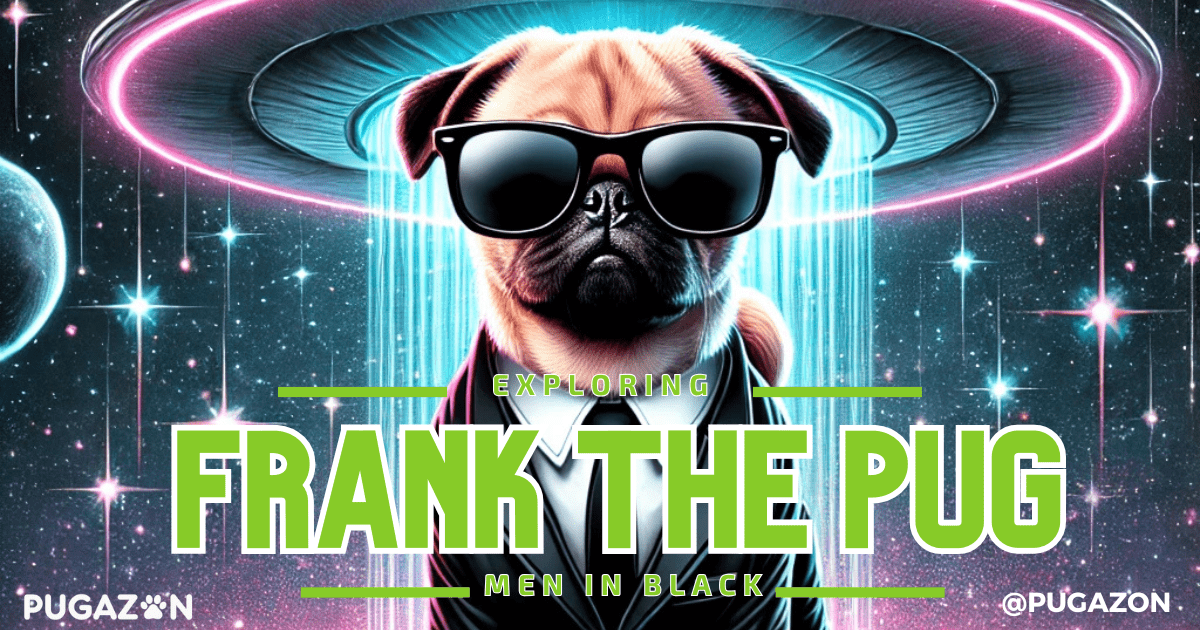
- Frank the Pug from Men in Black is arguably the most iconic animated-talking pug hybrid, voiced by Tim Blaney. Originally just a cameo in the first film, his popularity earned him expanded roles and even appearances in cartoons and spin-offs.
- The Secret Life of Pets featured Mel, a hyperactive, loyal, and slightly chaotic pug that resonated with dog lovers everywhere.
- In Netflix’s Hilda, the pet deerfox Twig is often seen alongside a background pug—subtle, but present in nearly every episode set in the city.
These appearances aren’t accidental. Animators are drawn to the exaggerated proportions of pugs—big eyes, flat snouts, and that permanently worried-yet-sassy expression. They translate perfectly into animation, where facial expressions and visual storytelling matter most.
Comic Strips, Memes & Online Domination
While Garfield may rule the feline comic world, pugs have slowly dominated the digital doodle age. Comic strips and webcomics like “Pugly Truth”, “Pug and Prejudice”, and “Pugs of Westeros” (yes, it’s real) bring a pug-centric lens to everything from relationships to politics.
Meanwhile, in the age of meme culture, pugs have become unofficial mascots for mood swings, laziness, and endearing grumpiness. One of the earliest viral pug memes involved a pug dressed as a dinosaur, groaning melodramatically to the Jurassic Park theme. The formula? Costume + snort = gold.
Their unique anatomy and hilarious body language lend themselves naturally to relatable, loopable content—perfect for TikToks, GIFs, and social media gags. Pugs don’t need punchlines—they are the punchline.
Cameos in Major Films & Franchises
Beyond Men in Black, pugs have appeared in numerous films and high-profile projects:
- “Kingsman: The Secret Service” featured a memorable sequence where Taron Egerton’s character adopts a pug named JB (short for Jack Bauer). He mistakes it for a bulldog—a nod to common pug confusion—resulting in one of the film’s most endearing subplots.
- In the world of Hollywood red carpets, celebrity pugs like Doug the Pug have appeared in music videos with Katy Perry and on sets with Justin Bieber, solidifying their role as pop culture’s most camera-ready dogs.
- Hotels.com’s ad campaign featured a travel-loving pug in designer sunglasses, reinforcing the breed’s association with luxury and lovable mischief.
Designer Dogs in Designer Frames
Pop culture isn’t just cartoons and comedy. In the world of high art, pugs have inspired and appeared in paintings, graphic design, and even fashion campaigns.
- Andy Warhol famously was photographed with pugs on a regular basis and some say they became a muse due to his love of the pug breed.
- The fashion house of Valentino Garavani has long associated pugs with elegance. Valentino’s own pugs frequently appeared at fashion shows, and one of his product lines—Oliver—was even named after his favorite pug.
- In the world of commercial illustration, pugs are the subject of everything from vintage travel posters to modern NFT collectibles.
Cultural Symbolism Meets Screen Stardom
What makes pugs such enduring characters in visual media? It’s more than just their looks. Pugs represent contradiction:
- They’re regal yet ridiculous.
- Stoic yet slapstick.
- Cute yet comically defiant.
They’ve become cultural shorthand for the lovable misfit—the underdog with a smooshed face and a heart of gold. When a pug enters a scene, it never blends in. And that’s exactly the point.
Pugazon Culture Fact: In 2016, the Doritos Super Bowl ad featuring a pug chasing a snack through a glass door was voted one of the top Super Bowl commercials of the decade—proving that pugs and primetime ads are a perfect match. In the history of pugs they were not only famous in ancient times but are today as popoular as ever in mainstream entertainment.
Pugs in Fashion, Advertising & Elite Circles
The Rise of the Internet Pug: Viral Fame & Meme Domination
From imperial silk robes to Parisian catwalks, the pug’s flair for the fabulous has never been in doubt. Their unique charm, expressive eyes, and compact elegance have not only made them the muse of monarchs—but also darlings of the modern fashion elite, pop artists, and global advertising campaigns.
Haute Dog: The Pug’s High-Fashion Evolution
Long before they were Instagram influencers, pugs were already fashion icons. In Victorian England, they were dressed in tiny velvet jackets and adorned with ribboned collars. But it wasn’t until the late 20th century that they cemented their place in haute couture.
One of the most striking endorsements came from Valentino Garavani, the legendary Italian designer. Known for his impeccable taste, Valentino had multiple pugs—who often traveled with him on private jets and appeared in fashion magazines. He once remarked that his pugs were the only critics he truly trusted. They lounged beside him in luxury penthouses and backstage at runway shows, unintentionally outshining the supermodels. Valentinos love for pugs was so strong he even named a collection after his beloved pug Oliver.
📸 Pug Moment: Valentino’s pugs even made appearances in the 2008 documentary Valentino: The Last Emperor, solidifying their place in high fashion history.
Andy Warhol’s Pug Obsession
In the realm of art, few names carry more cultural cachet than Andy Warhol—and yes, he was a pug person. His affection for the breed was evident not just in photographs but in his personal life. Warhol’s close friend Brigid Berlin owned a pug which was often photographed perched on his lap or trailing him through Manhattan’s Studio 54-era social scene.
Warhol’s use of bold, flat, symmetrical aesthetics in his art mirrors the very look of a pug—soft, oddball charm that breaks the mold. The presence of pugs in his life and work aligned with his love for subjects that were both visually striking and culturally loaded.
🎨 Pop Art Parallel: Like soup cans and Marilyn Monroe, Warhol’s pugs were an unexpected mix of simplicity, fame, and style—qualities that defined the pop art movement.
From Snack Ads to Super Bowl Spots: Pugs in Advertising
If fame was once limited to royal portraits, today it’s earned through 30 seconds of screen time—and pugs have mastered the art of the cameo.
One of the most famous appearances came during Doritos’ Super Bowl ad campaign, where a pug, driven by the promise of chips, charges through a screen door in glorious slow motion. The spot went viral, spawning a flood of remakes and securing pugs a permanent place in commercial comedy.
Another notable campaign? Hotels.com, which featured a travel-savvy pug as a jet-setting sidekick—snout buried in hotel pillows, paws on concierge bells. The message? Pugs are not only lovable—they’re luxury-savvy, too.
📺 Ad Impact: Studies by marketing agencies have noted that pugs consistently rank among the most “emotionally resonant” animals in commercials—ranking higher than golden retrievers and cats in viewer recall tests.
Elite Circles: Artists, Celebrities & Lifestyle Icons
Beyond designers and advertisers, pugs have long found favor among A-listers and creatives. From Rob Zombie’s goth-glam home to Paris Hilton’s designer-dog purse era, pugs have remained favorites for those who walk the line between eccentric and endearing.
In Hollywood, pugs have been favored by actors and directors alike—appearing in stylized shoots, personal vlogs, and behind-the-scenes reels. Unlike trendier designer breeds, pugs offer something more nuanced: a quirky glamour that never feels try-hard.
🖼️ Fashion Quote: “A pug is like a living accessory with a heartbeat and opinions,” one fashion editor once noted. “They don’t just pose—they judge your shoes while doing it.”
The Face of Lifestyle Branding
In recent decades, the pug has become the mascot of cozy luxury. Their likeness is used across product packaging, editorial spreads, and even luxury pet lines. They’ve inspired collections of pug-print handbags, coffee mugs, scented candles, and stationery across brands like Kate Spade and Paperchase.
Thanks to their expressive features and universally charming presence, pugs have become visual shorthand for charm, indulgence, and whimsy. And whether it’s a pug-printed bathrobe or a designer leash, the breed has evolved into an aesthetic all its own.
💼 Marketing Matrix:
Sector | Example | Outcome |
Fashion | Valentino’s pugs | Style-symbol status |
Fine Art | Andy Warhol’s love of pugs | Cultural credibility |
Advertising | Doritos, Hotels.com | Viral recognition |
Merchandising | Mugs, collectibles & apparel lines | Global fanbase monetization |
The Pug as Fashion Philosophy
In the words of dog-loving fashion icon Iris Apfel: “More is more, and less is a bore.” That’s pug energy in a nutshell—unapologetically extra, unbothered by trends, and effortlessly photogenic.
What makes pugs work in elite and creative circles isn’t just their look. It’s their attitude. They strut. They snooze like divas. They have resting judgment face. And in industries obsessed with originality, that kind of authenticity is always in demand.
🐾 Pug Joke for the Runway:
Why did the pug get kicked out of fashion week?
Because it stole the spotlight—and all the snacks backstage.
It began with a snort—and ended with a scroll. The history of pugs certainly hasn’t been boring.
As social media exploded in the late 2000s, few could have predicted that an ancient breed bred for the laps of emperors would become the ultimate clickbait. But pugs did just that. With their expressive eyes, human-like reactions, and cartoonish charm, they became digital darlings almost overnight. The “history of pugs” didn’t just survive the internet age—it thrived in it, finding new life in memes, viral videos, and influencer culture. This wasn’t just evolution. It was pug-lution.
The Perfect Storm: Why Pugs Were Born for the Internet
The pug’s physical features—squishy face, dramatic expressions, and comedic gait—read like a Pixar character come to life. But combine that with their low-energy charm and social temperament, and you’ve got a dog that not only tolerates the camera but poses for it.
Where other breeds bark, the pug smolders.
Where others perform tricks, the pug becomes the trick.
Add high-speed internet, smartphone cameras, and a global audience desperate for serotonin, and it’s no wonder pugs went viral. Early Reddit threads, BuzzFeed lists, and Tumblr gifs cemented their reputation as the web’s most GIF-worthy breed.
Doug the Pug: The Four-Legged Social Media Mogul
Enter Doug the Pug, perhaps the most famous pug in digital history. With over 13 million social media followers, brand deals, music video appearances (yes, that’s Doug with Katy Perry), and a Netflix animated series in development, Doug didn’t just go viral—he built an empire.
From dressing up as movie characters to lounging in coffee shops like a tired Brooklyn writer, Doug embodied internet relatability. He wasn’t just cute—he was content.
His success proved that pugs weren’t just a meme. They were a marketing force, driving merchandise sales, book deals (Doug the Pug: The King of Pop Culture), and charity campaigns. He became the face of pug virality—and opened doors for others to follow.
Meme Culture & Reaction Gifs: Pugs as Digital Emoticons
A pug looking disappointed became the universal emoji for “Mondays.”
A pug in a dinosaur costume screamed Halloween mood.
A pug sneezing? That’s your friend reacting to bad takes on Twitter.
In meme culture, pugs evolved into shorthand for human feelings—confusion, sass, joy, existential dread. They blurred the line between dog and digital avatar. Instagram pages like @pugsofinstagram curated daily content featuring pugs in costumes, on skateboards, or just looking fed up with humanity.
And it didn’t stop there.
TikTok ushered in a new wave of pugfluencers, like Noodle the Pug, whose “bones or no bones” days became a viral barometer for whether or not to stay in bed. Even the stock market was jokingly said to be affected by Noodle’s bony decisions.
Pugs in Pop Music, Film, and Internet Ads
Beyond social posts, pugs began appearing in online commercials, banner ads, and even branded content collaborations. Pet insurance companies, clothing brands, and snack companies found that inserting a pug—especially one with a party hat or confused expression—increased click-through rates dramatically.
And let’s not forget Kaley Cuoco’s Priceline commercial, where her pug co-star nearly stole the scene. That moment wasn’t just adorable—it was a branding masterstroke. Companies began deliberately choosing pugs for their ability to go viral organically, thanks to how easily their image was shared and reshared.
The Pug as a Symbol of Internet Nostalgia
As meme culture aged and social platforms matured, the pug became a symbol of the early internet—a golden era of innocent humor, harmless content, and lovable weirdness. Many millennials and Gen Z users associate pugs with the early days of Vine, Tumblr humor, and the heyday of “Doggo” language.
Even today, nostalgic compilations of “Top 10 Pug Vines” or “Pugs That Broke the Internet” rack up millions of views on YouTube. They’re digital time capsules, reminding users of a simpler, sillier time online.
Pug Merch & Monetization: Turning Likes into Lifestyle
From Etsy stores selling hand-drawn pug prints to TikTok creators launching pug-themed skincare lines, the monetization of pug fandom went mainstream. Entire lifestyle brands built around the pug aesthetic—snuggly, snarky, slightly judgmental—have gained cult followings.
YouTube Shorts and TikTok continue to fuel this movement in the history of pugs. Find creators sharing pug reactions to trending audio, “pov” videos of pug attitudes, and short clips like “a day in the life of my pug who thinks he’s royalty.”
It’s not just content. It’s a culture.The history of pugs has been impactful to say the least.
Fun Fact of the Feed:
Doug the Pug has been named “People’s Choice Animal Star of the Year” and raised over $500,000 for children’s hospitals—making him not only viral but virtuous.
Pug Joke to End the Scroll:
Why did the pug start a YouTube channel?
Because his snorts already had more personality than half the internet!
Modern-Day Pugs: Health, Breeding & Global Popularity
A Compact Canine With Complicated Needs
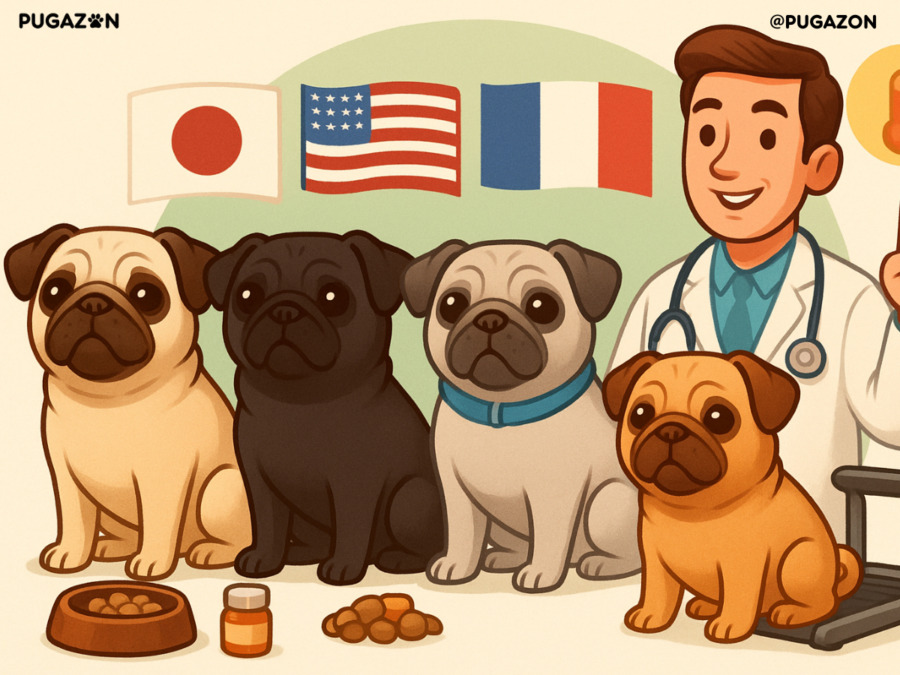
Pugs may be small, but modern science has shown that their genetics are anything but simple. Today’s pug is at the center of global conversations about ethical breeding, canine health, and responsible pet ownership—particularly because of their brachycephalic (short-nosed) structure.
As their popularity has soared in the 21st century—spurred on by memes, influencers, and celebrity owners—so too have concerns about their well-being. In the history of pugs this section explores the full picture of the modern pug’s lifestyle, from skyrocketing registrations to deeply scrutinized health standards.
Popularity Rankings: Still Riding High
Let’s be clear: the pug hasn’t lost its charm. Despite changing trends in pet ownership, they remain one of the most beloved small dog breeds worldwide.
According to the American Kennel Club (AKC), pugs consistently rank among the top 35 most popular breeds in the United States each year. They are even more popular in the UK, China, and parts of Europe, where their manageable size and affectionate demeanor make them ideal for city dwellers and families alike.
🔹 UK Kennel Club registrations saw a surge of nearly 50% between 2005 and 2015, though recent years have brought modest declines due to growing health awareness.
Health Issues: Not Just a Cute Face
The pug’s face—iconic and instantly recognizable—is also the source of many of its modern health problems.
Common Health Concerns:
- BOAS (Brachycephalic Obstructive Airway Syndrome): Narrowed nostrils and elongated soft palates can lead to breathing difficulties, snoring, and heat intolerance.
- Eye Problems: Their prominent eyes make them prone to corneal ulcers, dry eye, and proptosis (eye displacement).
- Skin Conditions: Wrinkle folds can trap moisture and bacteria, leading to skin infections.
- Orthopedic Issues: Pugs may suffer from hip dysplasia, patellar luxation, and spinal problems like hemivertebrae.
- Obesity: A modern epidemic. Pugs love food and are often overfed, leading to joint strain and heart issues.
Fact: A 2022 study published in Canine Medicine and Genetics found that pugs were more likely than other breeds to suffer from at least one disorder, sparking renewed calls for improved breed standards.
The Ethical Breeding Movement
In response to the above concerns, major veterinary and kennel organizations worldwide have tightened breeding recommendations and pushed for reform.
Initiatives & Regulations:
- UK Kennel Club has revised its Breed Watch guidelines to highlight health red flags during judging.
- Germany and the Netherlands have implemented breeding restrictions on flat-faced breeds that fail breathing assessments.
- Some countries now require BOAS testing before pugs can be used for breeding or shown competitively.
- Ethical breeders are increasingly promoting “retro pugs”—a pug mix bred for a slightly longer snout, improved breathing, and more functional body conformation.
Important Note: Retro or “reform” pugs are controversial. While some vets praise them, purists argue they deviate from the breed’s original appearance. Nonetheless, they’re gaining momentum as a health-forward alternative.
Global Fanbase & Social Influence
Despite controversy, pug popularity remains globally resilient—bolstered by their internet-friendly expressions, comedic movements, and “human-like” reactions.
Viral Trends That Keep Pugs in the Spotlight:
- Instagram Influencers: Pages like @itsdougthepug (over 3.5 million followers) have turned pugs into brand ambassadors, charity mascots, and even authors of merch-heavy books.
- TikTok Trends: Hashtags like #puglife and #pugsoftiktok have billions of views, fueling meme culture and quirky videos.
- Celebrity Endorsements: Many celebrities with pugs, including Paris Hilton, Gerard Butler, and PewDiePie, have openly gushed over their pugs—though the emphasis has recently shifted toward adoption advocacy and rescue awareness.
Stat: As of 2024, over 9 million posts have been tagged with #pug on Instagram—ranking them among the top 10 most shared dog breeds on the platform.
Rescue Organizations & Advocacy
As awareness of pug health issues has grown, so too has the rise in pug-specific rescues and adoption initiatives.
Notable Efforts:
- Pug Rescue Network (USA): Places hundreds of surrendered and abandoned pugs into forever homes each year.
- The Pug Dog Welfare & Rescue Association (UK): Actively rehabilitates and rehomes neglected or medically compromised pugs.
- Many rescues now educate prospective owners on what to expect—from lifetime medical costs to daily care routines for wrinkle cleaning and diet control.
Modern-Day Perception: Companion or Concern?
The pug now straddles two identities: beloved companion and symbol of complex breeding ethics. While some see them as cute cultural icons, others view them as cautionary tales of human intervention in canine genetics.
What’s clear is that today’s pug demands a more informed and proactive owner than ever before—someone who understands that “cute” comes with responsibility.
The Takeaway
Modern pugs aren’t just Instagram stars or couch clowns—they’re emotionally expressive, loyal, and deeply connected to the humans who care for them. But with that joy comes a duty of care that reflects how far we’ve come since the breed’s days in the Forbidden City and Queen Victoria’s royal court.
Their continued popularity proves one thing: despite medical debates and ethical challenges, the pug remains a dog that humans simply can’t quit.
Cultural Interpretations of Pugs Across Continents
A Breed That Speaks Many Cultural Languages
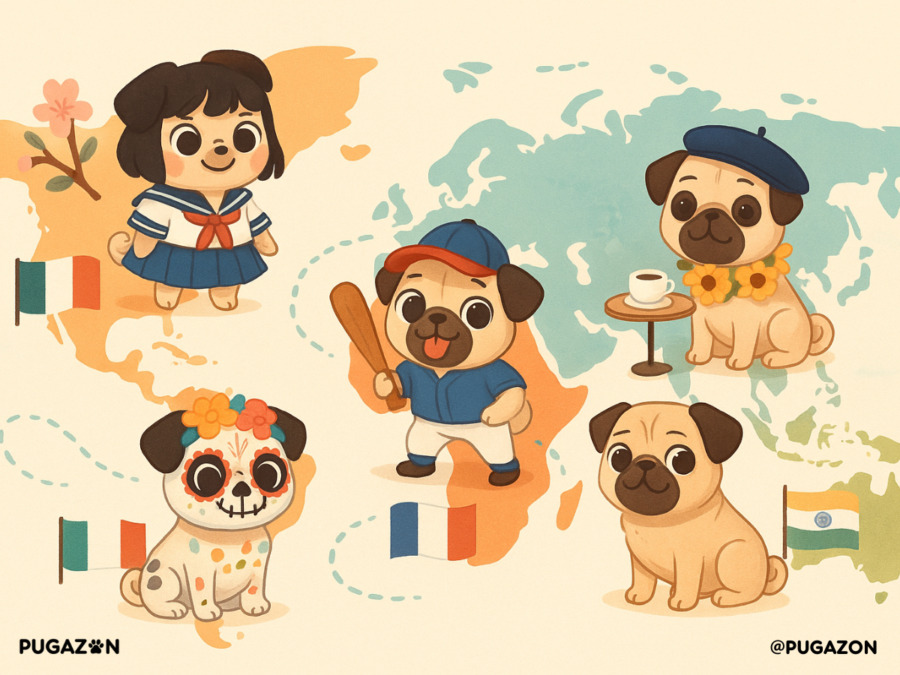
Few dog breeds have transcended borders and languages like the pug. While their snub-nosed silhouette is universally recognizable, the meaning and symbolism of pugs vary dramatically across cultures. From imperial guardians in China to satirical icons in Western art, pugs have played everything from spiritual symbols to pop-culture mascots, shaped by the values, aesthetics, and beliefs of each society.
This global journey reveals not only how pugs were perceived historically—but also how they continue to reflect the changing priorities of the people who adore them.
Asia: Sacred Guardians and Symbols of Nobility
China: The Spiritual Origins
The pug’s history begins in ancient China, where they were revered not merely as pets but as symbols of protection, status, and spiritual harmony. Associated with Buddhism, their facial wrinkles were thought to resemble the Chinese character for “prince” (王), and owning a pug was considered a mark of imperial favor. They were called “Lo-sze” and often gifted to visiting dignitaries or Buddhist temples.
Pugs were bred to be lap companions of emperors and scholars, believed to bring peace to households. In this context, they weren’t just ornamental—they were living emblems of order, serenity, and enlightenment.
Japan: From Guardians to Pop Icons
Pugs entered Japan in the early 20th century and were seen initially as exotic imports. However, their unique look made them highly compatible with Japanese kawaii (cute) culture. They now regularly appear in manga, anime, and character merchandise. In fact, a pug character named “Goma-chan” became a minor celebrity, showing how the breed transitioned from sacred symbol to adorable sidekick in pop culture storytelling.
Europe: Aristocracy, Symbolism, and Satire
The Netherlands & Germany: Loyalty and Resistance
In 16th- and 17th-century Europe, pugs were adopted by the elite, but nowhere more famously than the Netherlands. As noted earlier, the pug became the symbol of the House of Orange after one reportedly saved Prince William of Orange from an assassination attempt.
This gave the pug a symbolic identity tied to loyalty and political courage, especially during a time of religious and national upheaval. Paintings from the Dutch Golden Age often show pugs posed like aristocrats—reflecting not only their owners’ status but their loyalty.
France: Flamboyance and Satire
In 18th-century France, the pug became part of the rococo aesthetic—a breed associated with fashion, vanity, and self-indulgence. Marie Antoinette is said to have owned a pug named Mops, which she reportedly smuggled into France. In this cultural context, pugs became a symbol of decadence, adored for their amusing appearance and dramatic personality.
Satirists of the era sometimes used the pug to represent the absurdity of the upper class—an amusing, pampered pet that mirrored the frivolity of its owners.
The United Kingdom: Victorian Sentimentality to Modern Nostalgia
The British experience with pugs spans centuries and shifts in tone. Under Queen Victoria, pugs were elevated to regal companions, cementing their place in upper-class society. However, by the late 19th century, their role evolved into that of a domestic darling, often appearing in Victorian portraits as emblems of loyalty and affection.
British culture today sees the pug as both a nostalgic pet and a modern social media mascot. They regularly appear in advertising and television, blending old-world charm with modern-day relatability.
North America: From Couch Clowns to Meme Kings
In the United States and Canada, pugs are largely celebrated for their quirky appearance and comedic personality. Unlike their aristocratic roots in Europe or spiritual roles in Asia, North American culture has embraced the pug as a lovable oddball—a dog that’s as emotionally expressive as it is photogenic.
Their flat faces, expressive eyes, and strange noises have made them ideal internet content. From the breakout fame of Frank the Pug in Men in Black to viral stars like Doug the Pug, pugs have been fully absorbed into meme culture—symbolizing both self-deprecating humor and unapologetic laziness.
This regional interpretation of pugs reflects the broader cultural embrace of quirky individuality and emotional honesty in pets.
Latin America: Status and Celebration
In countries like Mexico, Brazil, and Argentina, pugs are still considered status dogs by many. Their maintenance needs and purchase costs make them rarer in rural areas, but they’re popular in cities where apartment living suits their compact size.
They frequently appear in urban fashion campaigns, parades, and even themed parties, where their appearance is celebrated with costumes and accessories. In some Latin American cultures, they’re often linked to luxury, affection, and playful showmanship.
Africa & the Middle East: Emerging Popularity
Though less historically rooted in African or Middle Eastern cultures, pug ownership is steadily rising in urban areas across South Africa, Egypt, the UAE, and beyond. Their suitability for indoor living and moderate exercise makes them appealing to city dwellers and families.
Social media and Western influence have also played a role, with more pug-themed pages and influencers appearing from these regions. In these cultures, pugs are largely seen as aspirational pets, often linked with middle-class upward mobility.
A Mirror of Our Values
The pug’s global cultural impact is remarkable—not just for its spread, but for the sheer diversity in meaning.
- In China, they represent harmony and nobility.
- In Europe, loyalty and indulgence.
- In North America, humor and emotional connection.
- In Japan, cuteness and pop appeal.
- In Latin America, showmanship and luxury.
- In emerging markets, aspiration and cosmopolitan status.
The pug has become a canine chameleon, adapting its identity to reflect the core values and aesthetics of each culture it touches.
The Globalized Pug Identity across History
With the rise of social media, global commerce, and international rescue efforts, the pug’s image is becoming more unified—but it still retains regional quirks. While some societies lean into their noble origins, others elevate their comedic flair or status symbolism.
This adaptability is arguably the breed’s greatest superpower. The pug isn’t just a dog—it’s a global character actor, capable of playing the wise sage, the court jester, the lap aristocrat, or the modern meme.
Why Pugs Remain Timeless in the Digital Age
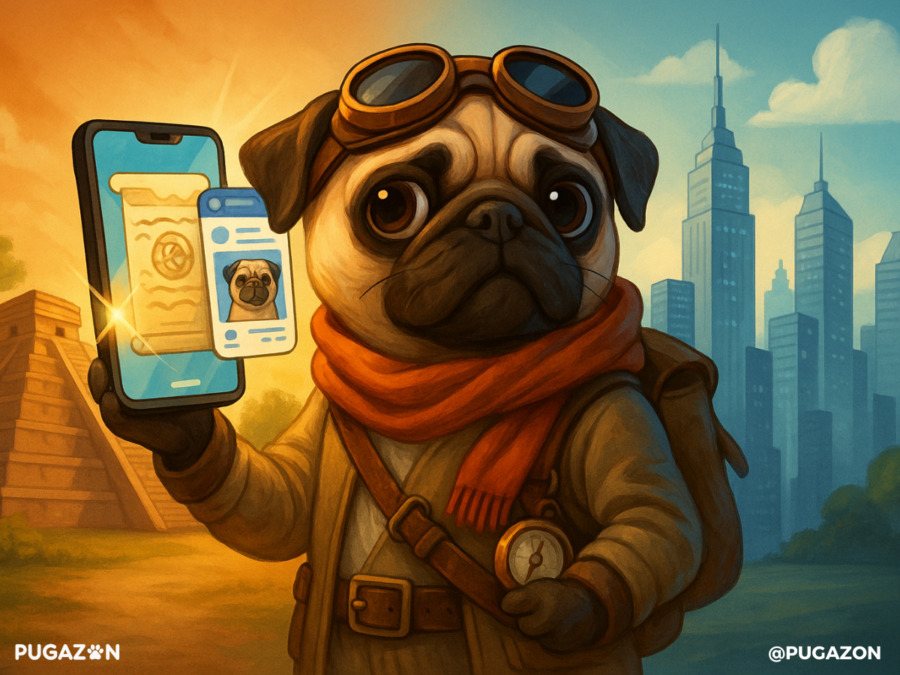
It’s easy to assume that in a world obsessed with innovation, artificial intelligence, and instant gratification, ancient dog breeds like the pug might fade into obscurity. But the opposite has happened. Instead of slipping away from the limelight, the pug has carved out a digital kingdom — trending on TikTok, anchoring viral memes, and outlasting breed fads that flare and fizzle. Why? Because pugs are the perfect paradox: ancient yet modern, wrinkled yet ageless, stubborn yet endlessly adored.
From Imperial China to Instagram, their evolution isn’t just about cuteness — it’s about adaptability, human connection, and cultural symbolism. In a time where identity is everything, pugs are the four-legged influencers who’ve mastered every platform without even trying.
From Scrolls to Scrolls: Pugs Across Media
What once began as silk paintings and imperial scrolls has now transformed into TikToks, YouTube Shorts, and meme accounts boasting millions of followers. But the appeal has always been rooted in the same thing: emotional expression.
No other breed delivers facial drama like a pug. Their features are like emoji incarnate — bulging eyes, expressive brows, lopsided grins. They look perpetually surprised, mildly judgmental, and hopelessly loyal all at once. That’s a content goldmine. In an era where thumbnails, stills, and reels dictate who gets clicks, pugs win the algorithm by simply existing.
But unlike trends manufactured by virality, the pug’s digital success isn’t artificial. It’s organic, historical, and deeply rooted in their personality traits — traits that align perfectly with modern digital life: small space adaptability, low-intensity exercise needs, and an overwhelming desire to be near humans 24/7. In other words, pug DNA is tailor-made for the modern home and the modern feed.
Meme Machines and Algorithm Whisperers
You know a breed has transcended when it’s no longer just a “dog” but a symbol. The pug is no longer just an animal; it’s a meme archetype. It represents drama, sass, stubbornness, laziness, loyalty — and often all in one short video.
Instagram pages like Doug the Pug and Puggy Smalls, have reached millions of followers, but they’re just the tip of the snout. Countless fan pages, fan art, and themed products (from slippers to NFT projects) all orbit the same gravitational truth: pugs are culturally sticky. Once you’ve laughed at a pug in a banana costume or one snoring like a freight train, they’re etched in your memory forever.
The best part? Pugs don’t have to try. They’re not doing backflips or chasing squirrels in agility courses. Their digital dominance is passive. They win hearts by sitting, staring, or refusing to move. If that isn’t peak internet behavior, what is?
A Breed That Breeds Connection
Behind the screens and stylized content, there’s another reason pugs thrive in the digital age: they reflect us.
Pugs mirror our quirks — from our love of naps to our low tolerance for nonsense. In a time where authenticity matters, their lack of pretense makes them relatable. You’ll never catch a pug faking enthusiasm or pretending to enjoy rain. They own their preferences, and that makes them more “real” than most influencer profiles.
In a digital world where connection is king, pugs function like emotional routers — drawing in attention, creating conversation, and building bonds across distance. Entire online communities have formed around pug care, rescue, accessories, and humor. Whether it’s a Reddit thread about pug snoring or a Facebook group titled “Pugs Against Mondays,” these dogs are digital catalysts for human interaction.
The Marketplace of Pugness
It’s not just engagement metrics that prove their appeal. Pugs have become a multi-million dollar niche market, fueling product sales from plush toys to boutique apparel. On Amazon alone, “pug gifts” pulls up thousands of listings — socks, figurines, calendars, custom phone cases, and more.
This isn’t random merchandising. It’s emotional commerce. People don’t just buy pug stuff because it’s cute; they buy it because it reminds them of their own dog or expresses a part of their personality. Wearing a hoodie that says “Pug Life” or lighting a candle called “Ancient Pug Farts” isn’t just a joke — it’s branding, identity, and fandom rolled into one.
With the rise of personalized products and creator economies, pugs are now the face of countless print-on-demand, Etsy, and TikTok Shop businesses. And unlike viral raccoons or fleeting animal stars, pugs have repeat power. People come back, again and again, because the charm doesn’t wear off. It evolves.
Eternal Branding for an Eternal Breed
One of the reasons pugs work so well in the digital age is because they blur lines — between humor and elegance, royalty and relatability, ancient legacy and modern lifestyle. That’s powerful brand equity.
Major campaigns and content creators frequently use pugs because their image is instantly recognizable and positively charged. They’re not intimidating. They’re not aggressive. They’re a universally safe emotional choice. And in an age where brand trust matters more than ever, a pug’s face brings joy without controversy — a marketer’s dream.
Their compact size makes them ideal for travel, city living, and multi-platform shooting. From unboxing videos to reaction reels, pugs slot effortlessly into any format. And that keeps them platform-agnostic, a trait most human influencers can’t boast.
Final Word: Why the Pug Endures
At the core of all this digital domination lies a very simple truth: pugs are human dogs. Not in biology, but in spirit. They watch you eat, mirror your mood, and nap like they pay rent. They need closeness, not a backyard. Eye contact, not fetch. They are, quite literally, made for companionship — which, in the internet age, is the ultimate product.
In a time of constant scrolling, viral chaos, and digital overload, pugs provide a much-needed pause button. They are comforting without being needy, funny without being forced, and emotional without manipulation. No filters, no edits — just unfiltered pugness.
And that’s precisely why, after thousands of years, the pug isn’t fading away. It’s uploading itself to eternity, one snort at a time.
FAQ – The History of Pugs
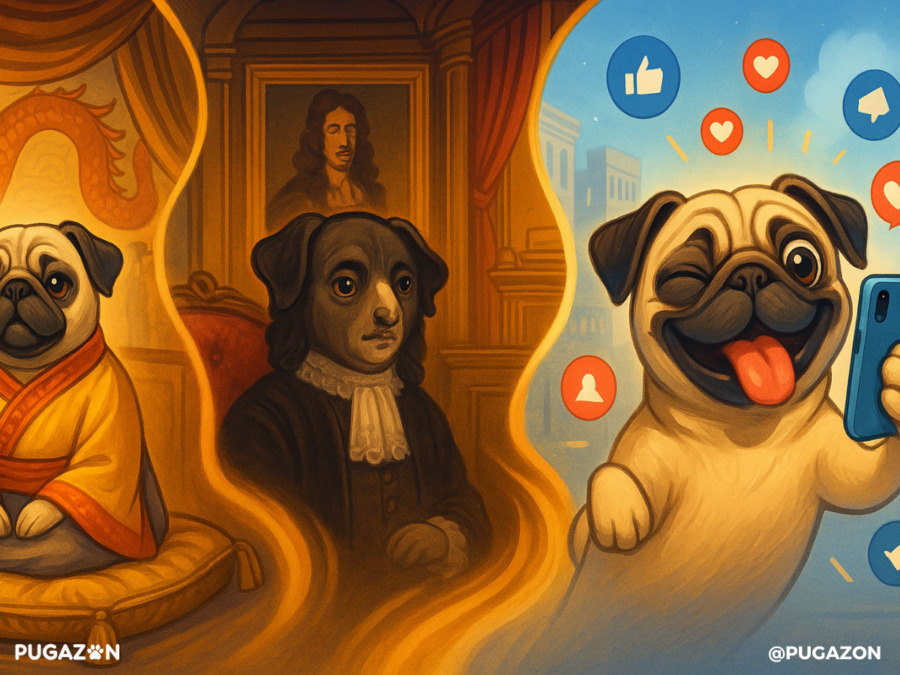
This comprehensive FAQ explores the most fascinating, strange, and downright delightful questions about the long, lumpy legacy of pugs. Whether you’re a curious first-time pug owner or a seasoned wrinkled snout connoisseur, here’s everything you never knew you needed to know about the history of these royal rascal dogs.
Pugs trace their wrinkled roots back over 2,000 years to Imperial China, where they were bred as companion dogs for royalty during the Han Dynasty. These early pugs were pampered by emperors and often guarded by soldiers, treated more like velvet-covered treasures than actual animals. Their wrinkled faces were said to resemble Chinese characters, which added to their mystique and spiritual symbolism.
Fun Fact: Pugs were so revered in ancient China that some even had their own miniature palaces and guards.
Their distinctive flat face and wrinkled forehead are no accident—it’s a result of centuries of selective breeding. The deep forehead wrinkles were once believed to resemble the Chinese character for “prince” (王), which made them especially appealing to Chinese nobility. Over generations, the breed was shaped into the charmingly snub-nosed companion we know today.
Important Note: These physical traits can lead to breathing challenges, so modern breeders are increasingly focused on improving pug health without sacrificing their iconic look.
Yes! After arriving in Europe via Dutch traders in the 16th century, pugs quickly became the lapdogs of choice for royalty. They were famously adored by William of Orange, Marie Antoinette, Queen Victoria, and even Napoleon’s wife, Josephine. They became status symbols, often dressed in ornate clothing and featured in royal portraits.
Notable Quote: “Few dogs can say they went from Chinese palaces to European thrones without skipping a treat.”
Pugs became the symbol of the House of Orange after one supposedly saved Prince William of Orange from assassination in 1572. Legend says the pug barked frantically during an ambush, waking William in time to escape. This act of loyalty earned the breed official mascot status for the royal house.
Did You Know? That legendary pug’s name was “Pompey,” and he’s even depicted lying at William’s feet in his tomb effigy.
While they didn’t storm any battlefields (unless you count nap time), pugs were emotionally important during wartime. Josephine Bonaparte famously used her pug, “Fortune,” to carry hidden messages while imprisoned before her marriage to Napoleon. They were also favored by European officers and nobles as morale-boosting companions during conflict periods.
Fun Fact: Fortune reportedly bit Napoleon on their wedding night—a bold act only a pug could get away with.
Queen Victoria was a major pug enthusiast and her breeding programs greatly influenced the modern appearance of the pug. She preferred the fawn and apricot coat colors and her love for pugs helped popularize the breed across British society. Pugs in this era were seen as fashionable and refined, often appearing in paintings and early photography.
Trivia: Victoria banned the practice of ear cropping for pugs, contributing to the breed’s signature floppy ears today.
By the late 19th century, pug populations began to decline due to changing trends and poor breeding practices. Fortunately, breeders in England and America took steps to standardize and protect the breed. In the early 20th century, the American Kennel Club (AKC) recognized the pug officially in 1885, leading to increased interest and responsible breeding programs.
Modern Impact: Today’s pugs are the result of centuries of preservation, with breeders now focusing on both health and temperament.
From Dutch Baroque paintings to 21st-century internet memes, pugs have always had an unshakable camera presence. Artists loved their expressive faces, and filmmakers found their quirks irresistible. Their blend of nobility, humor, and vulnerability has kept them in the spotlight for generations—from Renaissance oil paintings to Men in Black cameos.
Quick Fact: The pug’s pop culture domination isn’t new—it’s just gone viral now. They’ve always been “in frame.”
Ancient pugs likely had longer legs and snouts. As breed standards evolved—especially in Victorian England—pugs became more compact with shortened muzzles, deeper wrinkles, and a tightly curled tail. These changes were aesthetic choices aligned with elite tastes of the time.
Breeding Tip: Today’s breeders are rebalancing looks with health to ensure pugs thrive without respiratory or mobility issues.
Pugs embody a rare combination of universality and uniqueness. They’re small enough for urban living, sociable with all ages, and emotionally expressive—traits that transcend cultural barriers. Whether in Chinese symbolism, Dutch militarism, Victorian gentility, or modern meme culture, pugs have always adapted to their environment without losing their distinct identity.
Philosophical Pug Thought: They’re the only dog that can make you laugh, cry, and feel royal—all within five minutes.
Final Note: The Pug’s Legacy
Through dynasties, duchies, and digital fame, the pug has waddled its way into the hearts of humans for over two millennia. They’re not just pets—they’re historical mascots, cultural icons, and emotional soulmates in squishy form.